Friday, December 31, 2010

Best Biographies of 2010: Seven Lists

It is the end of the year, and best books lists are proliferating. Again, I am mining some of the most prominent lists to see which biographies and memoirs are being touted as the best. Just as in previous years, there is little agreement. Only The Immortal Life of Henrietta Lacks by Rebecca Skloot makes every list.

In compiling this list I have been inclusive in my definition of biography. What some readers might consider a history with biographical parts, I usually called a biography.

I find it curious that the hot genre of memoirs did not get many titles on some of the lists this year. The editors at Amazon, Library Journal, and the Washington Post added many memoirs to their lists, but the other four publishers gave much more attention to biographies than memoirs.

Have a Happy New Year and enjoy lots of books.

Amazon Top 100

Biographies

Empire of the Summer Moon: Quanah Parker and the Rise and Fall of the Comanches, the Most Powerful tribe in American History by S. C. Gwynne

How to Live: Or a Life of Montaigne in One Question and Twenty Attempts at an Answer by Sarah Bakewell

Immortal Life of Henrietta Lacks by Rebecca Skloot

Play Their Hearts Out: A Coach, His Star Recruit, and the Youth Basketball Machine by George Dohrmann

Secret Historian: The Life and Times of Samuel Steward, Professor, Tattoo Artist, and Sexual Renegade by Justin Spring

Unbroken: A World War II Story of Survival, Resilience, and Redemption by Laura Hillenbrand

Memoirs

Autobiography of Mark Twain, Vol. 1 by Mark Twain

Decoded by Jay-Z

Dirty Life: On Farming, Food, and Love by Kristin Kimball

Half a Life by Darin Strauss

Just Kids by Patti Smith

Let’s Take the Long Way Home: A Memoir of Friendship by Gail Caldwell

Life by Keith Richards

Medium Raw: A Bloody Valentine to the World of Food and the People Who Cook by Anthony Bourdain

Memory Chalet by Tony Judt


Booklist

Biographies

Alice Neel: The Art of Not Sitting Pretty by Phoebe Hoban

Colonel Roosevelt by Edmund Morris

Fab: The Life of Paul McCartney

Galileo by John Heilbron

Grant Wood by R. Tripp Evans

George, Nicholas, and Wilhelm: Three Royal Cousins and the Road to World War I by Miranda Carter

Hare with Amber Eyes: A Family’s Century of Art and Loss by Edmund de Waal

Immortal Life of Henrietta Lacks by Rebecca Skloot

Washington: A Life by Ron Chernow

Memoirs

Grace of Silence by Michele Norris

Hitch-22 by Christopher Hitchens

Junior Officers’ Reading Club: Killing Time and Fighting Wars by Patrick Hennessey


Kirkus Reviews

Biographies

Bonhoeffer: Pastor, Martyr, Prophet, Spy by Eric Metaxas

Bridge: The Life and Rise of Barack Obama

Charlie Chan: The Untold Story of the Honorable Detective and His Rendezvous with American History by Yunte Huang

Cleopatra: A Life by Stacy Schiff

Colonel Roosevelt by Edmund Morris

Immortal Life of Henrietta Lacks by Rebecca Skloot

Madison and Jefferson by Andrew Burstein and Nancy Isenberg

Play Their Hearts Out: A Coach, His Star Recruit, and the Youth Basketball Machine by George Dohrmann

Publisher: Henry Luce and His American Century by Alan Brinkley

Memoirs

Composed by Rosanna Cash

Hitch-22 by Christopher Hitchens

Just Kids by Patti Smith

Mentor by Tom Grimes

Soul Mining: A Musical Life by Dennis Lanois


Library Journal

Biographies

How to Live: Or a Life of Montaigne in One Question and Twenty Attempts at an Answer by Sarah Bakewell

Immortal Life of Henrietta Lacks by Rebecca Skloot

Mark Twain: Man in White by Michael Shelden

Tasting Freedom: Octavius Catto and the Battle for Equality in Civil War America by Daniel R. Biddle and Murray Dubin

Memoirs

Breath: A Lifetime in the Rhythm of an Iron Lung by Martha Mason

Confessions of a Prairie Bitch: How I Survived Nellie Oleson and Learned to Love Being Hated by Alison Arngrim

Eating Pomegranates: A Memoir of Mothers, Daughters, and the BRCA Gene by Sarah Gabriel

Just Kids by Patti Smith

Sleep in Me by Jon Pineda

Sound of a Wild Snail Eating by Elisabeth Tova Bailey

There’s a Road to Everywhere Except Where You Came From by Bryan Charles


New York Times 100 Notable Books

Biographies

Bridge: The Life and Rise of Barack Obama

Charlie Chan: The Untold Story of the Honorable Detective and His Rendezvous with American History by Yunte Huang

Cleopatra: A Life by Stacy Schiff

Colonel Roosevelt by Edmund Morris

Empire of the Summer Moon: Quanah Parker and the Rise and Fall of the Comanches, the Most Powerful tribe in American History by S. C. Gwynne

Immortal Life of Henrietta Lacks by Rebecca Skloot

Koestler: The Literary and Political Odyssey of a Twentieth-Century Skeptic by Michael Scammell

Last Boy: Mickey Mantle and the End of America’s Childhood

Last Hero: The Life of Henry Aaron by Howard Bryant

Pearl Buck in China: Journey to “The Good Earth” by Hilary Spurling

Pops: A Life of Louis Armstrong by Terry Teachout

Publisher: Henry Luce and His American Century by Alan Brinkley

Secret Historian: The Life and Times of Samuel Steward, Professor, Tattoo Artist, and Sexual Renegade by Justin Spring

Talented Miss Highsmith: The Secret Life and Serious Art of Patricia Highsmith by Joan Schenkar

Washington: A Life by Ron Chernow

Willie Mays: The Life, the Legend by James S. Hirsch

Memoirs

Hitch-22 by Christopher Hitchens

Life by Keith Richards


Publishers Weekly

Biographies

Colonel Roosevelt by Edmund Morris

Hero: The Life and Legend of Lawrence of Arabia by Michael Korda

Immortal Life of Henrietta Lacks by Rebecca Skloot

Last Boy: Mickey Mantle and the End of America’s Childhood

Unbroken: A World War II Story of Survival, Resilience, and Redemption by Laura Hillenbrand

Memoirs

Autobiography of Mark Twain, Vol. 1 by Mark Twain

Grace of Silence by Michele Norris

Just Kids by Patti Smith


Washington Post

Biographies

Artist, the Philosopher, and the Warrior: The Intersecting Lives of da Vinci, Machiavelli, and Borgia and the World That Shaped Them by Paul Strathern

Betsy Ross and the Making of America by Marla R. Miller

Bridge: The Life and Rise of Barack Obama

Cleopatra: A Life by Stacy Schiff

Eyes of Willie McGee: A Tragedy of Race, Sex, and Secrets in the Jim Crow South by Alex Heard

Immortal Life of Henrietta Lacks by Rebecca Skloot

Justice Brennan: Liberal Champion by Seth Stern and Stephen Wermiel

Kingdom Under Glass: A Tale of Obsession, Adventure, and One Man’s Quest to Preserve the World’s Great Animals by Jay Kirk

Last Hero: The Life of Henry Aaron by Howard Bryant

Lives Like Loaded Guns: Emily Dickinson and Her Family’s Feuds by Lyndall Gordon

Pearl Buck in China: Journey to “The Good Earth” by Hilary Spurling

Poisoning the Press: Richard Nixon, Jack Anderson, and the Rise of Washington’s Scandal Culture by Mark Feldstein

Storyteller: The Authorized Biography of Roald Dahl by Donald Sturrock

Unbroken: A World War II Story of Survival, Resilience, and Redemption by Laura Hillenbrand

William Golding by John Carey

Memoirs

Denial: A Memoir of Terror by Jessica Stern

Hitch-22 by Christopher Hitchens

Just Kids by Patti Smith

Let’s Take the Long Way Home: A Memoir of Friendship by Gail Caldwell

Life by Keith Richards

Mentor by Tom Grimes

My Nine Lives: A Memoir of Many Careers in Music by Leon Fleisher and Anne Midgette

Rope and a Prayer: A Kidnapping from Two Sid by David Rohde and Kristen Mulvihill

Wednesday, December 29, 2010

The King's Speech, a Film by Tom Hooper

"Why should I waste time listening?" asks Lionel Logue from the forbidden seat of St. Edward's chair in Westminster Abbey.

"Because I have a voice!" the prince soon to be King George VI replies, his words ringing through the ancient cathedral.

There are many great lines exchanged by the pair in the new film The King's Speech, starring Colin Firth (as the king) and Geoffrey Rush (as Logue). The speech therapist often gently pokes the very proper prince, sometimes causing the monarch to curse. (And the film gets an undeserved R rating.) He doesn't stutter when angered. Logue's job is to find a way for his client to deliver messages to the nation without stop.

Set in the 1930's, director Tom Hooper has recreated a gray, slightly dingy London. The weather is often dismal or cold, and the lighting in interiors is dim. Still, the old trappings of a powerful nation can be seen in the huge halls and heavy furniture of Buckingham Palace and in the great spaciousness of Westminster Abbey. In contrast, the office and home of the speech therapist are large but almost devoid of furnishings other than chairs and large radios. In the background is the music of Mozart, Beethoven, and Brahms. Britain is a struggling but proud nation wanting to uphold its honor. The prince's brother Edward wants to marry a divorcee and Germany is threatening war.

Moviegoers who like great acting and a bit of history will enjoy the film. Firth and Rush are brilliant. Harry Potter fans will enjoy seeing Helena Bonham Carter, Timothy Spall, and Michael Gambon. Masterpiece Theater fans will recognize Derek Jacobi and Anthony Andrews. I'd enjoy seeing the film again. I think it will become a classic.

The real king's speech can be heard on YouTube. It seems particularly tense after seeing the film.

Monday, December 27, 2010

ricklibrarian's Books That Matter and Review of 2010

2010 was a good book year for me. As I look back, November was especially stellar, as almost every book that I read for a few weeks was superb. It was difficult deciding which were best of the year, but I took a stab at it anyway. I also selected movies and music.

In this post, I also include links to all my reporting from library conferences and to all my reviews of new reader's advisory sources.

Have a Happy New Year for good reading and cultural experiences.


Recent Nonfiction

Claiming Ground by Laura Bell

Dangerously Funny: The Uncensored Story of the Smothers Brothers Comedy Hour by David Bianculli

The Grace of Silence: A Memoir by Michele Norris

I Am Nujood, Age Ten and Divorced by Nujood Ali and Delphine Minoui

The Immortal Life of Henrietta Lacks by Rebecca Skloot

Life List: A Woman's Quest for the World's Most Amazing Birds by Olivia Gentile

Lighting Out for the Territory: How Samuel Clemens Headed West and Became Mark Twain by Roy Morris, Jr.

Mark Twain: The Man in White: The Grand Adventure of His Final Years by Michael Shelden

A Mighty Long Way: My Journey to Justice at Little Rock Central High School by Carlotta Walls LaNier

Nine Lives: In Search of the Sacred in Modern India by William Dalrymple

Packing for Mars: The Curious Science of Life in the Void by Mary Roach

Zeitoun by Dave Eggers


Recent Fiction

Corduroy Mansions by Alexander McCall Smith

The Man from Beijing by Henning Mankell

The Tower, the Zoo, and the Tortoise by Julia Stuart


Great Old Books

First Person Rural: Essays of a Sometime Farmer by Noel Perrin

In Patagonia by Bruce Chatwin

Roseanna by Maj Sjöwall and Per Wahlöö


Children's Books

An Egret's Day by Jane Yolen

Face to Face with Elephants by Beverly Joubert

Marching for Freedom: Walk Together, Children, and Don't You Grow Weary by Elizabeth Partridge

Saving the Ghost of the Mountain by Sy Montgomery

Zen Shorts by Jon J. Muth and Zen Ties by Jon J. Muth


Audiobooks

The Help by Kathryn Stockett

The House at Sugar Beach: In Search of a Lost African Childhood by Helene Cooper

Nelson Mandela's Favorite African Folktales

Sweet Mandarin by Helen Tse


Film and Video

Afghan Star - a documentary directed by Havana Marking

Alexandra - a film by Alexander Sokurov

Downfall - a film by Oliver Hirschbiegel

Life - from BBC Earth

Mine, - a documentary film by Geralyn Pezanoski

Young @ Heart, - a documentary film by Stephen Walker


Readers' Advisory

Historical Fiction II: A Guide to the Genre by Sarah L. Johnson

Now Read This III by Nancy Pearl and Sarah Statz Cords

Pictures in the Middle: The Use of Photos and Other Illustrations in Biographies

Readers' Advisory 2.0: The Next Dimension by Barry Trott and Jane Jorgenson (a PLA pre-conference)

The Readers' Advisory Handbook, edited by Jessica E. Moyer and Kaite Mediatore Stover

The Readers' Advisory Issue of Public Libraries

Writing Reviews for Readers' Advisory by Brad Hooper


Library Issues and Services

I Have These Statistics - Now What: Getting Started on the Path of Collection Analysis by Kathryn King (A PLA presentation)

Ready Reference Collections: A History by Carol A. Singer (An article in RUSQ)

Reference Books to Go: The Liberation of Our Reference Books

Reflections of a Reference Librarian by Susan J. Beck (An article in RUSQ)

Thrilling Tales and Selected Shorts: An Adult Story Time for Your Library by David Wright (A PLA presentation)

Tough Times: Thoughts on the Library Job Market from a Department Head Who Just Hired a Reference Librarian

Wednesday, December 22, 2010

Carless in Chicago: Live and Thrive in Chicago without Owning a Car

One of my dreams is to some day not own a car. I can name many benefits, such as healthy walks, less polluting, no car insurance, and not having to buy the car in the first place. So I was eager to see Carless in Chicago: Live and Thrive in Chicago without Owning a Car by Jason Rothstein. Could the author offer a practical plan?

Rothstein, who has been living without owning a car for over five years, starts by making a case similar to my thoughts above. In the first chapter, he adds up all the direct and indirect expenses of owning a car and also suggests wonderful things you could do with the money otherwise. In chapter 2, he discusses health benefits of walking and the dangers of driving. In the remaining seven chapters, he puts forth his well-tested plan. He explains the Chicago transit systems, taxis, bike riding in the city, and how to rent a car when you need one. Importantly, he belongs to car sharing coop, so he has a great variety of vehicles should he need one, which he rarely does.

While Rothstein's aim is winning converts, his book can actually help drivers, too, as he explains the street system of Chicago and reviews print and online maps. Tourists and committed drivers might also use his guide to help them plan their occasional use of trains into and around the city. You can find Carless in Chicago at our library with the travel books.

Rothstein, Jason. Carless in Chicago: Live and Thrive in Chicago without Owning a Car. Lake Claremont Press, 2010. ISBN 9781893121485.

Monday, December 20, 2010

Too Far from Home: A Story of Life and Death in Space by Chris Jones

Having recently read and enjoyed Packing for Mars by Mary Roach, I eagerly sought another space program book and found in the audiobook section at Thomas Ford Too Far from Home: A Story of Life and Death in Space by Chris Jones. This 9 disc/11 hour audiobook read ably by Erik Davies recounts events of 2003 when U.S astronauts Kenneth Bowersox and Donald Petite with Russian flight engineer Nikolai Budarin were left on the International Space Station with no date for returning to earth after the explosion of the shuttle Columbia. NASA suspended the shuttle program in the wake of the accident, thus postponing the scheduled launch of Expedition 7 to replace the crew of Expedition 6. Bowersox, Petite, and Budarin would have to sit tight.

Of course, sitting is not easy in space. Everything floats. The ever-quizzical Petite began playing with his food, letting liquids float, spin, and assume strange shapes, which he photographed. Meanwhile, Bowersox strove to keep himself in shape with conditioning exercise, not wanting to lose bone mass or muscle strength. Though NASA managers tried to keep the crew busy, there was plenty of unstructured time. Ever mindful of their close quarters, the men strove to accommodate differences. Ironically, their worst dispute was over who might get to stay on the station if a Russian rescue mission could only take two of them. They were all enjoying their extended time in space.

Like Roach in her book, Jones goes into great detail about the dangers of entering and returning from space, the effects of space travel on the human body, and the histories of the U.S. and Russian space programs. While Roach presents a witty collection of essays on various topics, Jones weaves his research into an intimate narrative about the lives of the three astronauts, their wives, and key officials of the NASA program. Both are great books for readers interested in the history and future of the space program.

Jones, Chris. Too Far from Home: A Story of Life and Death in Space. Doubleday, 2007. ISBN 9780385514651.

9 discs. Books on Tape, 2007. ISBN 9781415935675

Friday, December 17, 2010

The Eagles: An American Band by Andrew Vaughan

Bonnie's an Eagles fan - music not football. She brought home The Eagles: An American Band by Andrew Vaughan over the weekend, and, having just run out of books, I snatched the oversized book about the country rock band and read its 288 pages within 24 hours. That is not an impressive feat, as the print is well-spaced, and many of the book's pages are filled with pictures. I also had plenty of time while the cold winds blew outside. It was pleasant conjuring southern Californian scenes wrapped in a blanket and sipping hot chocolate.

Though it seems like I have been listening to "Peaceful Easy Feeling" forever, I guess I had never really read much about the Eagles. I knew most of their names, that there had been plenty of booze and drugs, and that they had broken up over personality and artistic differences, but I could not have told you who replaced whom or at what time. I did not know their hometowns, musical origins, or songwriting credits. I did not realize that they had all released solo albums since the breakup, nor how many recording awards they had scored. Of course, that is all in the book.

Author Andrew Vaughan takes a lot of care to tell how the original four Eagles came together, thanks to agent David Geffen, producer John Boylan, and singer Linda Ronstadt - they had all been in her ever-changing band. Vaughan also recounts the history of country-influenced rock, telling the stories of the Byrds, Flying Burrito Brothers, Poco, and other bands that had failed to sell the sound to the American public. Then he details the band's career, album by album and fight by fight. The author ends with an account of the reformed band, a bunch of guys in their sixties who still play well and are again making tons of money.

Bonnie will now be happy that I have finished so she can read about Frey, Henley, and the other men who at one time or another have been called Eagles.

Vaughan, Andrew. The Eagles: An American Band. Sterling, 2010. ISBN 9781402777127.

Wednesday, December 15, 2010

Bird Feathers: A Guide to North American Species by S. David Scott and Casey McFarland

Field guides to birds are many. Birders often have Sibley's Guide to Birds or any number of books from Audubon, Roger Tory Peterson, or National Geographic. Add to these state and local guides to help spotters name what they see. Each has illustrations or photographs of species and basic data about locations and behavior. There are also guides to nests, eggs, and bird songs to help. What I had not seen before is a popular guide for bird feathers. Now there is Bird Feathers: A Guide to North American Species by S. David Scott and Casey McFarland, a beautiful photo guide that also explains the science of feathers and flight.

The science of feathers is complex. Feathers are made of keratin, the same protein that makes hair, nails, horns, and hooves. As feathers grow, they are filled with blood, but when they mature, the blood withdraws, and they are then lifeless. If they are lost or damaged, birds can sometimes make replacements even before their scheduled molts. Each bird has six types of feathers, and feather shapes are contoured to assist flight. Colors may come from pigments or, in the case of the blue in blue jays, come from the way light reflects off air pockets in the interlocking barbicels.

In Bird Feathers, Scott and McFarland illustrate with photographs the feathers of 397 North American species, showing at least four feathers for each. What surprises me is how little color there is in the flight feathers of many common birds. Only the short breast, neck, and head feathers show much red or yellow. The longer feathers are mostly black, gray, brown, white, or a combination thereof. Still some are beautiful feathers. My favorites are the long elegantly striped feathers of the ring-necked pheasant and the bold black and white woodpecker feathers.

Bird Feather will interest serious birders and science students. It is a good addition to public library collection.

Scott, S. David and Casey McFarland. Bird Feathers: A Guide to North American Species. Stackpole Books, 2010. ISBN 9780811736183.

Monday, December 13, 2010

This is NPR: The First Forty Years

If only we had NPR trading cards, I would trade you a Scott Simon and a Carl Kasell for a Cokie Roberts and a Nina Totenberg. Throw in a Melissa Block, and I'd give you Bob Boilen and the Car Talk guys. Under no circumstances would I part with Ira Flatow or Robert Krulwich. They would stay in protective cases with my prized Susan Stamberg and Noah Adams cards.

I mention this because there is a great new book, This is NPR: The First Forty Years, and reading this book is a bit like reading a by-the-decades history of a baseball team. The editors have collected stories by and about NPR staff, and I hold the reporters and program hosts from public radio in as much (or maybe more) esteem as my favorite baseball players Craig Biggio, Luis Gonzales, and Jeff Bagwell. Anyone who has listened to NPR for several decades will know their names and voices well. This book reveals their seldom-seen faces. (Trading cards with their photos and details of their assignments would still be appreciated.)

Like any sports team, NPR has had its ups and downs. The franchise has weathered its share of financial troubles and come out stronger by turning to subscribers and foundations for help instead of relying on the federal government. Once considered an "alternative news source," it now has more foreign correspondents than many of the newspapers, magazines, and broadcast networks once considered mainstream. It has also been a leader in developing online news programming. NPR is now a powerhouse, and like all sports dynasties, it has attracted anti-fans.

In addition to learning about the network, readers get reviews of major news stories, including Watergate, the Iranian Revolution, AIDs, the fall of the Berlin Wall, the 9/11 attacks, and the war in Afghanistan. For every serious story, there is also something lighter - David Sedaris telling his Christmas elf stories, Melisaa Block in a tundra pit, Paula Poundstone as a Wait Wait ... Don't Tell Me panelist, and Stephen Thompson starting the Tiny Desk Concert podcasts. NPR fans have to read This is NPR.

This is NPR: The First Forty Years. Chronicle Books, 2010. ISBN 9780811872539. Includes audio CD.

Tuesday, December 07, 2010

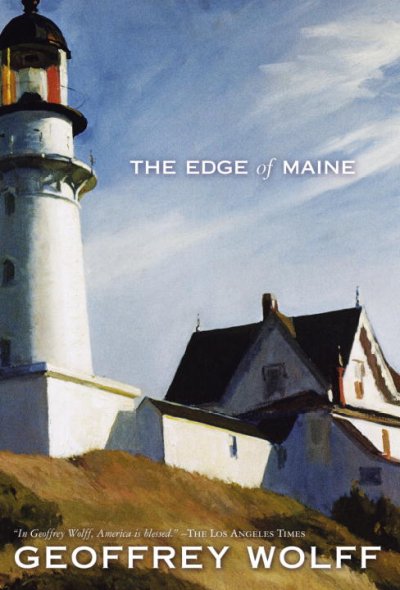
The Edge of Maine by Geoffrey Wolff

When I met Bonnie in 1981, she had recently visited the coast of Maine with her family. The rocky shores, woods, and water sounded beautiful to me. For thirty years now it has been one of the places that I have wanted to go but have not. Luckily, I have books. Looking for novelist Geoffrey Wolff's new biography of Captain Joshua Slocum, I discovered his 2005 book of personal travel essays The Edge of Maine.

Wolff has been summering with his family in Maine for decades, usually approaching the state from the water. If they do not arrive in their boat Blackwing, they rent a boat and sails among the many small islands and up the navigable rivers. From this viewpoint Wolff has seen many changes since the 1960s, most of them for the better. Polluting factories have closed, threatened developments have been stopped, and dams have been removed. The result is that many of the dead zones are again teeming with life. Some endangered birds and fish have reappeared where they once thrived. There are still environmental problems (especially overfishing), but the shores and waters are much cleaner now than when the Corps of Army Engineers and manufacturers were making most of the shoreline decisions.

Local interests now support a clean environment, but it has not always been so. Factories were once courted by the many waterside towns to provide jobs and tax revenue, but most of the manufacturers have taken their business abroad to countries with lower wages and fewer regulations. Tourism and retirement living are now more important to the Maine economy, and both require natural beauty restored.

Boating is the interest that draws Wolff to Maine. As he tells it, the waters of Maine are quite challenging for amateur sailors. His hair-raising story about losing his way in unexpected fog while trying cross a treacherous bit of open water makes me certain that if I ever go, I'll stay on shore. Until then, I'll enjoy my armchair and continue read adventurous travel memoirs.

Wolff, Geoffrey. The Edge of Maine. National Geographic, 2005. ISBN 0792238710

Monday, December 06, 2010

A Mighty Long Way: My Journey to Justice at Little Rock Central High School by Carlotta Walls LaNier

I often read about the 1950s, a time when I was too young to realize what was going on around me. As I do, I discover a new world quite different from the one I thought I grew up in. For instance, at the close of 1957, the Associated Press ranked the integration of Central High School in Little Rock, Arkansas as the year's top national story - above the passage of a Civil Rights Act and President Eisenhower's heart attack. I do not remember ever hearing about this conflict when I was in school in the 1960s and 1970s. (My school did not integrate until fall 1965, and if there was a protest, I missed it.)

Were the events in Little Rock forgotten (suppressed) for several decades? According to Carlotta Walls LaNier in A Mighty Long Way: My Journey to Justice at Little Rock Central High School, integration in the Arkansas capital was not commemorated in any way until its thirtieth anniversary. LaNier was a member of the Little Rock Nine, first group of blacks to enter Central High, and she admits that she too wanted to forget. For years she did not even tell friends or even her children that she had been involved. She discouraged reporters seeking interviews. Why stew on the past? Some of her memories were terrible, and she just wanted to move on with her life. In time, however, she found that denying her part was holding her back from reconciliation, and when she spoke to a friend's class, none of who had heard the story, she discovered a calling.

In A Mighty Long Way, LaNier recounts the three years that she endured cold stares, heckling, and jostling by hostile white students, but she does not dwell on the conflict. She concentrates on describing the support network that kept her aimed at getting her degree from the previously all-white school. She tells about the stoic parents, resourceful community leaders, and fair-minded teachers who sacrificed their own comfort and safety to help. She also reveals that three years at Central High were not really three years. Governor Faubus shut all the Little Rock high schools down in LaNier's junior year in any effort to lease them to private interests to get around federal integration law. LaNier had to take correspondence courses and spend a couple of months in school in Cleveland to get credits for graduation.

LaNier is not the first of the Little Rock Nine to write. Melba Beals has written vividly about the troubles she endured in her long year at Central High in Warriors Don't Cry. Together the authors help restore a chapter in history that some would still have us forget.

LaNier, Carlotta Walls. A Mighty Long Way: My Journey to Justice at Little Rock Central High School. One World Books, 2009. ISBN 9780345511003.

Friday, December 03, 2010

The Girl in the Song: The True Stories Behind 50 Rock Classics by Michael Heatley and Frank Hopkinson

If I wrote a song about you, you would see how much I love you. You'd love me, too, and we would live happily ever after. That's the way it is supposed to be, isn't it? Well, reading The Girl in the Song: The True Stories Behind 50 Rock Classics by Michael Heatley and Frank Hopkinson, I see that that rarely works. Of the fifty relationships recounted in this book, only a handful result in lasting love. The stories might be enough to dissuade you from becoming a songwriter. You have a better chance of finding happiness if you don't broadcast your feelings if these stories are representative of the way things are.

Of course, heartbreak makes for better stories than happiness in most cases. There is plenty of that behind the words in songs, such as "Don't Think Twice, It's All Right," "My Sharona," "Every Breath You Take," "The Girl from Ipanema," "Maggie May," and "Tiny Dancer." The book's authors dish out sad stories about Bob Dylan, Sting, George Harrison, Graham Nash, Stephen Stills, and many other rock stars. You also learn how the songs charted in the U.S. and Great Britain and how they sparked careers. Some of the stories may be familiar if you read rock music magazines, but you'd have to have read for decades to know them all. I did not know much at all about the musicians from the 1990s.

Not every story is about romantic relationships. "Fire and Rain" by James Taylor is about a friend who commits suicide. "Lovely Rita" starts with getting a parking ticket. "Sweet Caroline" is about five year old Caroline Kennedy.

Thanks to Jessica at Blogging for a Good Book for pointing out this nicely illustrated book, which I enjoyed over the course of four or five days as a break from reading other books.

Heatley, Michael and Frank Hopkinson. The Girl in the Song: The True Stories Behind 50 Rock Classics. Chicago Review Press, 2010. ISBN 9781569765302.

Wednesday, December 01, 2010

Charles Darwin and the Beagle Adventure by A. J. Wood and Clint Twist

When I first picked up Charles Darwin and the Beagle Adventure by A. J. Wood and Clint Twist, I did not see how to open it. It had two spines! Then I saw the drawing of a lock on the front and popped the cover open to reveal an attractively illustrated book with tiny books-in-the-book, pockets, and fold-out maps. Filled with nature drawings by Darwin and his contemporaries and with old photographs, the book seemed almost like a portable museum. Liking the bird drawings particularly, I thought it pretty and clever. I also thought I could read it in minutes but found more content than I calculated.

Aiming at 8 to 12 year olds, the authors have kept their text rather minimal, relying more on illustrations and quotes from the naturalist than their own words to tell story of the Beagle's voyage. It is a good story. The Beagle took five years to round the planet, spending much of its time in South America and the Galapagos Islands, where Darwin identified many species new to European science of the time. He sent thousands of specimens back to England. Studying them and thinking about the landscapes that he visited, he formed his ideas about evolution. He spent the rest of his long life completing the work he began on this voyage.

Young readers and adults who shun traditional science books will find Charles Darwin and the Beagle Adventure an attractive introduction to Darwin and his ideas of evolution. Those who want to know more about the naturalist, his family and friends, and how he came to write On the Origin of Species should try The Reluctant Mr. Darwin: An Intimate Portrait of Charles Darwin and the Making of His Theory of Evolution.

Wood, A. J. and Clint Twist. Charles Darwin and the Beagle Adventure. Templar Books, 2010. ISBN 9780763645380.