Showing posts with label music. Show all posts

Monday, November 10, 2014

Gus & Me: The Story of My Granddad and My First Guitar by Keith Richards and Illustrated by Theodora Richards

Sweet is not an adjective that many people would apply to Rolling Stones founding member Keith Richards. They might reconsider after reading Gus and Me: The Story of My Granddad and My First Guitar by Richards and his daughter illustrator Theodora, a children's book about a boy and his grandfather.

As a Baby Boomer who has listened to my share of Rolling Stones songs, I was charmed by this story that tells how Richards became a musician. His musical interest was inspired by his warm and attentive grandfather Gus, who introduced the boy to many instruments and musical genre. When Keith was able to play "Malaguena" on guitar, Gus told him "I think you're getting the hang of it." A career was launched.

I like the book's illustrations which blend bands of color into pen and ink drawings. They move from page to page, carrying the narrative forward. I also like how I had to turn the book 90 degrees for one two-page spread. Gus and Me is fun to read.

Gus and Me comes with a compact disc of Richards happily reading the book with a little of his own guitar accompaniment. Be sure to listen.

Richards, Keith. Gus and Me: The Story of My Granddad and My First Guitar. Megan Tingly Books, 2014. ISBN 9780316320658.

Friday, November 07, 2014

The Sapphires, a film by Wayne Blair

Bonnie and I have been watching the British comedy Moone Boy on our local PBS station. One of the standout characters is Martin Moone's imaginary friend Sean Murphy, played by Chris O'Dowd. O'Dowd is also creator of the program. If you have also been watching and would like to see more of O'Dowd, try the 2012 Australian film The Sapphires, an entertaining musical look back at the 1960s.

The story line is that four talented aboriginal girls from a small town outside Melbourne form a singing group hoping for fame and fortune. O'Dowd is Dave Lovelace, the promoter who discovers them and suggests that they switch from singing country songs to Motown soul so they can tour American military bases in Vietnam in 1968. The premise may sound a little far-fetched, but the story is inspired by a true story. Of course, the film producers do not actually tell the true story, changing many of the most important details, but they do capture the sound and look of the time. (Disregard the 1970s Tupperware that appears at a sales party.)

The Sapphires is promoted as a comedy, but it has some serious content. The group is in danger in a war zone, of course, but more critical to the story are scenes in the Australian outback, where they are put down by whites as sub-human. We even see government officials taking away light-skinned children to raise as whites. Comedy and romance, however, dominate. The funniest scenes are those in which the girls learn to sing with soul under O'Dowd's direction.

My library showed The Sapphires in its film discussion series. Attendance was small but we had a great discussion. Everyone said that they were glad they came.


Friday, October 17, 2014

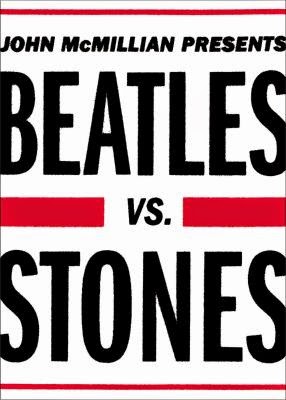
Beatles vs. Stones by John McMillian

How could I not read Beatles vs. Stones by John McMillian? I was in fourth grade when I first heard the Beatles singing "She Loves You" and "I Saw Her Standing There." In fifth grade I saw A Hard Days Night. I have had Beatles recordings in my possession ever since.

I did not pay much attention to the Rolling Stones until their single "Ruby Tuesday." I considered them as just part of the wave of British bands that included Herman's Hermits, the Animals, the Dave Clark Five, the Who, and the Hollies. Just a music fan, not a critic, I did not rank them in any way. I also liked the Stones' "Get Off of My Cloud" and "Jumpin' Jack Flash," but I never bought another of their records until middle age.

Growing up in the middle of nowhere, not reading rock magazines, I was never aware of a rivalry between the Beatles and the Rolling Stones. Even as an adult reader, not seeking gossipy publications, I rarely found stories of a conflict, so a whole book on the topic caught me by surprise. Its cover suggests a boxing match or sporting event, which in the end seems an appropriate suggestion. The story of Beatles vs. Stones is that of competitors, not enemies.

In the beginning, the Beatles helped the Rolling Stones with advice, contacts, publicity, and songs. There might never have been much conflict if it were not for journalists asking leading questions. Young men with inflated egos and desiring attention often then responded to sensational negative reporting with trash talk. Friendships between members of the bands warmed and cooled throughout the active phases of their careers. The disputes were relatively juvenile until Mick Jagger recommended a crooked manager to John Lennon.

Beatles vs. Stones is an interesting and entertaining account of the bands and their times that will appeal to Baby Boomers and their children who have heard so much about the good old days. It does not take long to read and may nudge some readers to get out the old albums.

MacMillian, John. Beatles vs. Stones. Simon and Schuster, 2013. 303p. ISBN 9781439159699.

Friday, September 19, 2014

This Land That I Love: Irving Berlin, Woody Guthrie, and the Story of Two American Anthems by John Shaw

2014 is the 200th anniversary of "The Star Spangled Banner," the official national anthem of the United States. It is not, however, the only song used to evoke love of country. "America the Beautiful," "My Country 'Tis of Thee," and "Stars and Stripes Forever" are also often played or sung at public ceremonies. Most anthems are really old, but there are two songs from the 20th century in their class, "God Bless America" written by Irving Berlin and "This Land is Your Land" by Woody Guthrie. Author John Shaw explains the evolution of the two songs in This Land That I Love: Irving Berlin, Woody Guthrie, and the Story of Two American Anthems.

While these two newer songs differ much in tone, and their authors held very different political positions, Shaw shows that they have over time converged in many ways. "God Bless America" began as a strident war march, and "This Land is Your Land" began as a labor rights anthem. There was little love in either. Verses were added and dropped, and performers also reinterpreted the songs in ways unplanned by the composers. As their composers softened and added more spiritual lyrics for their songs, they became more like we know them today.

Setting is very important in this story. The author spends much time on the lives of the composers and political and economic history of the country during the periods in which the composers lived. Shaw also tells abbreviated stories of other American anthems that have risen and fallen in popularity. Readers who enjoy dual biographies or micro-histories may enjoy This Land That I Love.

Shaw, John. This Land That I Love: Irving Berlin, Woody Guthrie, and the Story of Two American Anthems. Public Affairs, 2013. 274p. ISBN 9781610392235.

Audiobook. Audio Go, 2013. 6 compact discs. ISBN 8671482931853.

Monday, June 02, 2014

The Vinyl Dialogues: Stories Behind Memorable Albums of the 1970s as Told by the Artists by Mike Morsch

I am nearly the perfect reader for The Vinyl Dialogues: Stories Behind Memorable Albums of the 1970s as Told by the Artists by Mike Morsch. First, I listened to a lot of rock music in the 1960s and 1970s. Second, I enjoy behind-the-scenes stories about rock music. Third, I owned (or still own) several of the recordings profiled in this book. My shortcoming as a reader of this book is I stopped listening to pop music radio and buying rock records around 1976 when I went through a classical music phase. As a result, I had not heard of some of the artists interviewed by Morsch for the stories in The Vinyl Dialogues.

The author compensates for my deficiency by including hooks in every story. Even when I did not know the artist or album, the stories were good and I recognized someone involved in the plot. The group Head East toured with Jethro Tull and was essentially fired by its leader Ian Anderson. Southside Johnny and the Asbury Jukes were given songs by Bruce Springsteen. Player reminded listeners of the Hall and Oates, Steely Dan, and the Doobie Brothers.

My favorite story may have been the one about the album recorded by Dave Mason and Cass Ellliot, which was called Dave Mason and Cass Elliot. I recently read about two in Graham Nash's book, Wild Tales. In the story about Joe Walsh and Barnstorm, I was struck by a statement by Joe Vitale that albums of the 1960s and 1970s were "variety shows." I think that is a great description for Beatle albums. I also read with special interest stories about the Guess Who, Three Dog Night, and America.

Including Morsch's introduction and Epilogue, there are 33 chapters in Vinyl Diaglogues, none over 10 pages. Reading one and then searching the web for some relevant videos once a day would give a younger reader a good sense of the variety of the 1970s music scene. Older readers will already many of the songs. More about the project can be found on the Facebook page Vinyl Dialogues.

Morsch, Mike. The Vinyl Dialogues: Stories Behind Memorable Albums of the 1970s as Told by the Artists. Biblio Publishing, 2014. 265p. ISBN 9781622492077.

Monday, April 14, 2014

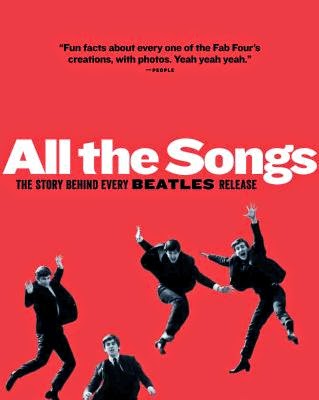
All the Songs: The Story Behind Every Beatles Release by Jean-Michele Guesdon and Philippe Margotin

The spindle on my inner phonograph is stacked high with Beatles records. I have just finished reading All the Songs: The Story Behind Every Beatles Release by Jean-Michele Guesdon and Philippe Margotin, a huge book that chronicles the recording history of the Fab Four. At the moment as I write, I'm hearing "Words of Love," the group's cover of a Buddy Holly song found on the album Beatles for Sale. When I woke awhile ago, it was a George Harrison composition "Don't Bother Me" from the With the Beatles album. I am obviously more cheerful than I was 30 minutes ago. As I finished the big book Saturday night, it was "Two of Us" and "Across the Universe" from Let It Be. I have been in many musical moods the last week.

All the Songs is a huge book for Beatles fans interested in the origins and recording of songs the group released on vinyl singles, EPs, and LPs between 1962 and 1970 in Great Britain and the United States. The songs are organized chronologically by year. Within each year, albums are first and then the singles. Songs are listed in order by track on the British editions of the albums. Had the songs been alphabetically arranged, All the Songs would be a mere dictionary and not the rich chronicle that it is.

By being chronological, All the Songs reveals the artistic development of the band and much about the personal lives of its members. I have been reading about the group for 50 years and recognized some of the facts and stories, but I still learned much I did not know. Some of the facts were little things, such as George Harrison inserted "beep beep" into "Drive My Car" or that the constant tapping in "Blackbird" was Paul McCartney tapping his feet, not a metronome as previously reported.

Some of the information is disturbing. I never dreamt that the narrator in "Norwegian Wood" sets fire to the apartment in the last verse. Though the song is basically John Lennon's composition, Paul McCartney suggested the bizarre twist. I'm still not sure that it is true.

Undoubtedly, all readers who take on reading the whole book will understand why the Beatles could not have possibly continued past 1970.

With help of lists in the appendix, I better understand the differences between the British and American markets for Beatles music in the 1960s. Americans were more willing to buy lots of records, and Capitol Records took advantage of American Beatlemania by putting out more albums with fewer songs on each. There were also many more singles in the U.S. than England. I was shocked to learn that "Yesterday" was never released as a single in the U.K. It was such a big hit in America.

Americans were also more enamored with Ringo Starr than his countrymen. I remember how my drum-crazy friends and I thought Starr as the key Beatle. All my fourth grade friends wanted to be Ringo.

Having read about the songs, I noticed new sounds and meanings as I listened to CDs this past week. I don't really need another reason to listen to the Beatles, but I am making my way through the catalog again. All the Songs has refocused my attention, and I feel about 40 years younger.

"Eight Days a Week" is now playing in my head.

Guesdon, Jean-Michele and Philippe Margotin. All the Songs: The Story Behind Every Beatles Release. Black Dog and Leventhal Publishers, 2013. 671p. ISBN 9781579129521.

Friday, January 17, 2014

Wild Tales: A Rock & Roll Life by Graham Nash

Graham Nash has led a rather charmed life, if I am reading his autobiography Wild Tales: A Rock & Roll Life correctly. He was a founding member of the Hollies and then a member of Crosby, Still & Nash (and Crosby, Stills, Nash & Young, of course). He has enjoyed numerous romantic relationships, most famously with Joni Mitchell. He has a loving family, has raised millions of dollars for charities and political causes, and has been a successful entrepreneur, having starting a business to print digital art. He was even awarded an OBE by Elizabeth II. There have been a few hardships in his life but never despair.

I think Nash's buoyancy is worth noting because many around him have not fair so well, particularly Stephen Still and David Crosby, both of whom have had terrible drug and alcohol problems. Nash seems to have tried every drug ever offered to him but claims to never have been addicted. He has done foolish things but seems to have survived and prospered. Why? He states in his book that music was always more important to him than drugs and that his passion for song carried him through troubles. It was music and friendship that kept him reuniting with Crosby and Stills and even Neil Young, despite their many differences. He says that he is addicted to the joining of their voices.

Nash also states that Crosby, Stills & Nash have never dissolved their partnership. Their agreement has always allowed for members having solo project and to play with other bands. Years apart are forgotten easily when they reunite.

"Tales" is an important part of the title, as Nash always has stories about event, songs, and people. I particularly liked reading about Nash's early life in Northern England with his working class family and his school pal Allan Clarke, learning to play guitar and saving meager wages to attend an Everly Brothers concert. He happily recounts stories behind the Hollies songs and playing on venues with the Beatles and other British musicians.

As a reference librarian, I was pleased to find Nash (or his publisher) included an index. In my experience, many contemporary autobiographical writings do not have indexes.

I was surprised to read so much about Cass Elliot and Jackson Browne, whom I did not associated with Nash. I am sure other readers will find other surprises as well. Wild Tales is an upbeat story that will appeal to many music fans.

Nash, Graham. Wild Tales: A Rock & Roll Life. Crown Archetype, 2013. 360p. ISBN 9780385347549.

Monday, June 03, 2013

The Who Sell Out by John Dougan

As a kid in rural America in the 1960s, listening to rock music from distant radio stations at night, I knew next to nothing about the songs and little about the performers. The top 40 disc jockeys might say whether a group was British or American, but not much more. So I never knew that the Who's Pete Townshend was serious about pop art and that there was meaning as well as humor behind the strange cover for The Who Sell Out (1967). Being just a seventh grader when I saw it, I thought the cover very strange, not something I want to have. I did not know it parodied commercialism. I doubt I even knew the word parody.

I also knew nothing about pirate radio stationed off the coast of Great Britain, playing music not offered by the selectors of BBC Radio. The musicians' union contract allowing only a limited number of "needle hours" on BBC Radio (to stop recorded music from replacing live music) and British bureaucrats wanting to keep radio refined kept a savvy BBC minority from responding effectively to the growing demand for youth oriented music. It was in this context that the Who recorded their third album. The story is deftly recounted in the compact music history The Who Sell Out by John Dougan. 

Who fans will, of course, enjoy this quick-reading book, which profiles the members of the band, recounts the recording of the album, and explains the reactions in Britain and America. The Who Sell Out would be fun to borrow from a library with a Who CD and a DVD of Pirate Radio.

By the way, the beans were refrigerated and Roger Daltrey developed a slight case of pneumonia.

Dougan, John. The Who Sell Out. Continuum, 2006. 131p. ISBN 9780826417435.

Friday, April 12, 2013

Abbey Road: The Best Studio in the World by Alistair Lawrence with a forward by Sir George Martin

Say that you have a talented young band and you want to sound like the Beatles. What could help more than to record at Abbey Road Studio in Studio 2 using some of the same microphones? It is possible. Abbey Road Studio may now be rented, and the studio has kept much of the recording equipment it has used since its opening in 1931, including a vast array of microphones. You can learn more in the big, beautiful photohistory Abbey Road: The Best Studio in the World by Alistair Lawrence with a forward by Sir George Martin.

Abbey Road Studios may be best known for rock recordings now, including Pink Floyd's The Dark Side of the Moon, but it began and continues to be a center for classical recording. The first official recording made in the studio featured Sir Edward Elgar conducting the London Symphony Orchestra in his own "Pomp and Circumstance March No. 1, Opus 39." Sir Thomas Beecham, Arthur Rubinstein, Jascha Heifetz, Fritz Kreisler, Andres Segovia, and Pablo Casals recorded at Abbey Road in its early days. Violinist Yehudi Menuhin was associated with the studios for nearly 70 years. In the 1960s, cellist Jacqueline du Pre and her husband pianist/conductor Daniel Barenboim recorded there.

Since the 1980s, Studio 1 has been busy with recording soundtracks for blockbuster movies, including The Empire Strikes Back, Raiders of the Lost Ark, Braveheart, Evita, Apollo 13, and all of the Harry Potter films. Pages 212-215 show work on various Lord of the Rings movies. The studio provided historic microphones for use in The King's Speech.

Throughout the book, the author features the employees of the studio, including engineers, producers, artistic directors, and even tea ladies, and shows vintage and cutting edge equipment, making the book a sort of introduction to recording science. The engineers at Abbey Road developed and patented many audio innovations.

"And in the end" (Beatles quote), readers will open their phonograph cabinets or run to You-Tube to revisit the music. Abbey Road is a big book worth lifting.

Lawrence, Alistair. Abbey Road: The Best Studio in the World. Bloomsbury, 2012. 303p. ISBN 9781608199990.

Friday, December 21, 2012

Good Rockin' Tonight: Sun Records and the Birth of Rock 'n' Roll by Colin Escott with Martin Hawkins

When there is more to a story, librarians want to know. Thus, having attended the musical The Million Dollar Quartet a few weeks ago, I set my sights on reading the book from which it was drawn, Good Rockin' Tonight: Sun Records and the Birth of Rock 'n' Roll by Colin Escott, one of the creators of the above mentioned musical.

The reader of Good Rockin' Tonight quickly encounters two viewpoints of the author. First, Escott believes that the lack of academic musical training was a plus for record producer Sam Phillips, owner of Memphis Recording Service and Sun Records. He was a radio technician with a love of good, honest music with emotion. He was also a risk taker. He did not have an unerring sense of what the public would buy, but he discovered a few great artists with whom people could identify. Second, the author believes that the best work by Elvis Presley, Johnny Cash, Carl Perkins, and Jerry Lee Lewis was with Sun Records. (Some fans might argue that Presley at RCA and Cash at Columbia had very successful careers.)

Of course, there is much more to the story of the recording company. Phillips spent his initial years recording local blues artists, including B.B. King, Howlin' Wolf, and Junior Parker. Record sales for singles by the stable of blues artists were always modest. Royalty checks rarely totalled more than twenty dollars, even for local hits. Everyone had to keep day jobs or flee to Nashville or Chicago. After the rockabilly period, Phillips recorded more country singers with minor success. Escott also admits that Phillips failed to find the right sound for Roy Orbison.

Escott takes us through the whole history of Sun Records in mostly chronological chapters that usually focus on a particular genre or artist. We learn about many musicians who never struck it rich and the perils of trying to running a small recording business. I enjoyed the well-guided trip back in time. 

Escott, Colin with Martin Hawkins. Good Rockin' Tonight: Sun Records and the Birth of Rock 'n' Roll. St. Martin's Press, 1991. 276p. ISBN 0312054394.

Friday, December 07, 2012

Mozart at the Gateway to His Fortune: Serving the Emperor, 1788-1791 by Christoph Wolff

Author Christoph Wolff, a professor at Harvard and known for his studies of Bach and Mozart, thinks that many scholars view Mozart's final four years incorrectly. They write as though Mozart were thoughtfully wrapping up his career as performer, conductor, and composer. They present evidence drawn both from the composer's works and his life. His music had reached a pinnacle and daily living was becoming unbearable. Death was predestined and unavoidable. Not so, says Wolff in Mozart at the Gateway to His Fortune: Serving the Emperor, 1788-1791.

Wolff looks first at Mozart's life, which was admittedly always chaotic and a bit nomadic. The composer's finances were a mess as he always lived beyond his means. Mozart was not worried, for he could usually make more money. The economic crash brought about by the Holy Roman Empire's war against the Ottoman Empire, however, closed theaters and reduced royal support for the arts. Mozart adjusted some to the times, writing Cosi Fan Tutte for only six singers as an economic measure. Still, he believed he was bound to be fabulously wealthy in time and was proved right, for royalties from his music made his wife and sons rich. Why sacrifice style and comfort when he could easily pay in the future? Wolff says Mozart was not despairing.

Wolff also examines Mozart's later symphonies, operas, sacred music, and unfinished works to see if he could find any signs that the composer was contemplating the end. He found no such signs and argues that Mozart had numerous unwritten works already composed in his head. The composer had plans for what would have been more glorious music.

Mozart at the Gateway to His Fortune is a short but not a quick read. Wolff uses some musical terms that casual readers will not recognize, and the book may seem a bit dry at times. Skimming over some of the technical paragraphs, I was able to get the gist. Wolff's introductions and summations, however, were compelling, and I enjoyed the effort. The book is a challenge worth taking for classical music fans.

Wolff, Christoph. Mozart at the Gateway to His Fortune: Serving the Emperor, 1788-1791. Norton, 2012. 244p. ISBN 9780393050707.

Wednesday, May 09, 2012

The Wrecking Crew: The Inside Story Of Rock and Roll's Best-Kept Secret by Kent Hartman

Do you know what "The Boxer" by Simon and Garfunkel, "California Dreaming" by the Mamas and the Papas, "Eve of Destruction" by Barry McGuire, "Help Me, Rhonda" by the Beach Boys, "Strangers in the Night" by Frank Sinatra, "Up, Up and Away" by the 5th Dimension, "Close to You" by the Carpenters, and most of the early recordings by the Tijuana Brass, Monkees, the Union Gap, and Grass Roots all have in common? The same drummer, Hal Blaine. "How could this be?" you might ask. While some of the acts above obviously needed back-up musicians, other were supposed to be self-sufficient bands playing their own music. Was Blaine in all of the music groups above? The answers to these questions are found in the new history The Wrecking Crew: The Inside Story Of Rock and Roll's Best-Kept Secret by Kent Hartman.

The unofficially-named Wrecking Crew were a couple of dozen or so studio musicians whom record producers used to improve the singles that they were releasing in the late 1950s, 1960s, and early 1970s. While well paid by the standards of the era, most were never credited on album covers or in the press. Particularly with groups like the Beach Boys, Byrds, Doors, Association, Grass Roots, and Union Gap, the record company marketers and the groups themselves did not want it known that they had had help making their records sound good. Fans might have been disappointed to learn the boys in the magazines were not really playing on the records.

In The Wrecking Crew, Hartman tells a fairly chronological story about what went on in the recording studios around Los Angeles with a few side trips to London, New York, Chicago, and Nashville. Each chapter is named after a song, such "The Limbo Rock" or "Classical Gas," and recounts the unfolding of musical discovery against studio politics. Central characters include Blaine, Glen Campbell, Phil Spector, Jimmy Webb, and Carol Kaye, the sole woman in the Crew.

I could hardly put The Wrecking Crew down, but I am a Boomer who was enthralled with the music described. With so many names, it will be a tough read for someone from a younger generation. Still, there is a lot to learn for anyone and a nice list of songs in the appendix to help. I'm sure they are all on You-Tube.

Hartman, Kent. The Wrecking Crew: The Inside Story Of Rock and Roll's Best-Kept Secret. Thomas Dunne Books, 2012. 292p. ISBN 9780312619749.

Wednesday, September 14, 2011

Fire and Rain: The Beatles, Simon & Garfunkel, James Taylor, CSNY, and the Lost Story of 1970 by David Browne

If ever there was a book aimed at a target audience, Fire and Rain: The Beatles, Simon & Garfunkel, James Taylor, CSNY, and the Lost Story of 1970 by David Browne is the book, and I am the part of the audience. In fact, I am probably the bullseye. The book recounts the lives of the musicians named in the subtitle during a year that was pivotal for all of them. The Beatles broke up for good, as did Simon and Garfunkel for all practical purposes. Crosby, Still, Nash, and Young broke apart for the first time eighteen months after forming, and James Taylor with hardly any effort at all showed the rest the way of the solo artist. In telling his story, Browne tells about the making and selling of four albums: Let It Be, Bridge Over Troubled Water, Sweet Baby James, and Deja Vu. I still have all four in vinyl!

I'm not so sure the story was lost in any way. I was not one to read Rolling Stone or listen to radio late into the night. Still, I knew the basic facts even in the early 1970s, though there were many backstage and offstage details that I did not know. Browne's achievement is brings all the information together into a story that shows how eleven different personalities suffered some very similar problems and outcomes. Too much money, recreational drugs, artistic egos, jealousy over women (Joni Mitchell, Rita Cooldidge), jealousy over song credits on albums, and even more drugs play heavily in the plot. Each man (they are all male) has his finer points and grave faults, and Browne portrays no one as evil. If you want to maintain shining knight images of these musical icons, this is not your book, but if you want a deep understanding and get some clues to meanings and importance of songs, Fire and Rain is a good reading choice.

Luckily for me, I have all the music on CD and my iTouch, too. I have plenty to listen to while rehabilitating my knee.

Browne, David. Fire and Rain: The Beatles, Simon & Garfunkel, James Taylor, CSNY, and the Lost Story of 1970. Da Capo Press, 2011. ISBN 9780306818509.

Monday, August 29, 2011

Are Compact Discs Disappearing? What Do I Do?

Just about six weeks ago I had the thought "I certainly won't be buying many more music CDs." I was beginning to believe the omens of the compact disc's demise.

  • Many new cars no longer come with CD players.
  • I had trouble finding a decent portable CD player to purchase recently.
  • Many of the stores selling CDs have closed.
  • Big box stores still selling CDs have poor collections.
  • Internet downloads are said to be taking over.

While I have had iTunes on my computers for about five years, I have still never purchased anything from the iTunes store. It seems like such a bad precedent to set. Instead, I have loaded many of my CDs into iTunes and from there put some of these onto my iPod. As nice as it is, I have never really listened to this music much except during the short, intense spring gardening season or on a trip. I seem to use the iPod more for listening to free podcasts that I download and audiobooks that I borrow from libraries. I still like my CDs in the car or in my portable player. It just seems the right package to me.

Still, I heard the death bells ringing and thought "I have plenty already. I really never need another CD. I can rotate what I have as long as I am still able to get a player." Enough is enough.

Of course, this is not an absolute pledge. I host the Friday at the Ford concerts at my library. We have a great variety of very talented musicians come, and they almost all bring CDs to sell. I have built a nice collection of CDs of musicians that I have not only heard live but have met and like as people. I know that I will continue to get several every year as long as musicians hand sell their CDs.

So I spoke with one of our library's shelvers the other day. When did he last buy a CD. At sixteen years of age, he has never purchased a CD. I hear a deep resonant dong.

So, what have I done since I had my thought?

In mid-July, I attended a free Sunday afternoon concert at Cantigny Gardens in Warrenville with friends. (There was a fee to enter the park.) The attraction was Guitarra Azul, a contemporary flamenco-inspired band with two guitars, a bass, and three percussionists. Their original music was really exciting, and I bought two CDs, Mariposa and Oasis. They sound really great in the car. They'd make a great soundtrack to a road trip.

Early in August, Bonnie and I went with friends to the Bristol Renaissance Fair in Bristol, Wisconsin. I was rather disappointed by the lack of live music. There used to be constant music from various minstrels and consorts on several stages all day.
Now, there are mostly comedy acts. As we headed toward the exit, however, we discovered a shop with Renaissance and Medieval games, DVDs, and music CDs. There was a vast selection of CDs featuring different countries, instruments, and forms of music. I could have spent the whole afternoon looking through them. As it was, I bought two: English Madrigals and Songs from Henry VIII to the 20th Century by the Oxford Camerata and Elizabethan Songs and Consort Music by the Rose Consort of Viols with Catherine King, mezzo-soprano. Both please me much.

Then, a week later, I discovered that our local music resale shop was going out of business and everything was 60 percent off. That made already well-priced CDs even less expensive. I restrained myself and only bought five titles:

Classic Masters by Gordon Lightfoot - really early songs three of which were new to me.
Greatest Hits: Shining Like a National Guitar by Paul Simon - a 2000 title that draws from about 25 years of his career.
In the Wind by Peter Paul & Mary - the photo on the back has them singing in front of the Washington Monument at a civil rights march. All the songs are classic PP&M.
Reasons Why by Nickel Creek - my daughter introduced me to this group.
Songs & More Songs by Tom Lehrer - Everyone should hear these outrageously clever political songs from the 1960s.

So, the CD may be endangered in some habitats but it is thriving at our house. Perhaps I will declare the property as a CD preserve. Maybe I can take in a few more CDs. I know some titles I'd still like to have.

I wonder what my next crazy thought will be?

Friday, May 13, 2011

Laura's Senior Recital

My final music report of the week is about attending my daughter Laura's senior recital at the University of Iowa. Being a voice major getting a degree in music therapy, she had chosen a recital as her senior project and seemed calmer than her parents on the appointed afternoon. With some of our friends and dozens of her fellow students, we dashed through outbursts of rain to get to the recital hall, a new facility built in a shopping mall on the edge of campus after the floods of 2008 destroyed the music building. It was comfortable and dry, and we settled in for nearly an hour of music.

Accompanied by very talented graduate piano student Seong-Sil Kim, Laura sang selections from Italienisches Liederbuch by Hugo Wolf, a selection of American songs by Harold Arlen and Cole Porter, three French songs by Camille Saint-Saens, and four Spanish songs by Fernando Obradors. I enjoyed them all, but I was particularly impressed by the Spanish pieces "Del cabello mas sutil" and "Chiquitita la novia" which required Laura to sing a lot of notes high and low, soft and loud. The recital was not recorded, but you can find other performances of the songs on YouTube. I was an undeniably proud parent before, during, and after the recital.

I suspect Laura's favorite moment was hearing "You passed" from her voice teacher. We all celebrated with pizza afterwards.

Monday, March 07, 2011

The Cello Suites: J. S. Bach, Pablo Casals, and the Search for a Baroque Masterpiece by Eric Siblin

Once upon a time, Johann Sebastian Bach was just a forgotten court musician, the cello was a little appreciated background instrument, and Bach's six suites for cello were considered exercises not worthy of public performance. Bach's sons were better known than their father for their compositions and musical appointments until Felix Mendelssohn conducted the father's mass St. Matthew Passion to great acclaim in 1829. At the time German nationalism was rising and the music of J. S. Bach was given more attention than it ever was in his lifetime. The irony, according to Eric Siblin in The Cello Suites: J. S. Bach, Pablo Casals, and the Search for a Baroque Masterpiece, is that the great German composer would probably have thought of himself as a Hungarian.

Through the nineteenth century, the cello remained a secondary instrument. Then young Spanish cellist Pablo Casals stunned listeners with his solo cello concerts, drawing more melody and passion from the instrument than people thought possible. He first won the hearts of music lovers in Barcelona, and then he conquered London, Paris, and New York.

Early in his career, Casals discovered a copy the Bach Cello Suites in a used sheet music shop, but he waited several decades before publicly playing the pieces which he championed but considered too challenging for most audiences. To his and music critics surprise, the six Cello Suites were cheered when Casals finally performed them. His musical success combined with his work for war refugees to make Casals a popular voice for social justice. His name joined those of Albert Einstein and Albert Schweitzer as the great humanitarians of their era.

In The Cello Suites, Eric Siblin mixes biography, history, and music criticism into a personal travel memoir that moves through time as easily as across national boundaries. It is a great journey and may inspire some readers to seek Bach and Casals recordings during or after their reading. Libraries should consider putting the books and music on display together.

Siblin, Eric. The Cello Suites: J. S. Bach, Pablo Casals, and the Search for a Baroque Masterpiece. Atlantic Monthly Press, 2009. ISBN 9780802119292.

Friday, December 17, 2010

The Eagles: An American Band by Andrew Vaughan

Bonnie's an Eagles fan - music not football. She brought home The Eagles: An American Band by Andrew Vaughan over the weekend, and, having just run out of books, I snatched the oversized book about the country rock band and read its 288 pages within 24 hours. That is not an impressive feat, as the print is well-spaced, and many of the book's pages are filled with pictures. I also had plenty of time while the cold winds blew outside. It was pleasant conjuring southern Californian scenes wrapped in a blanket and sipping hot chocolate.

Though it seems like I have been listening to "Peaceful Easy Feeling" forever, I guess I had never really read much about the Eagles. I knew most of their names, that there had been plenty of booze and drugs, and that they had broken up over personality and artistic differences, but I could not have told you who replaced whom or at what time. I did not know their hometowns, musical origins, or songwriting credits. I did not realize that they had all released solo albums since the breakup, nor how many recording awards they had scored. Of course, that is all in the book.

Author Andrew Vaughan takes a lot of care to tell how the original four Eagles came together, thanks to agent David Geffen, producer John Boylan, and singer Linda Ronstadt - they had all been in her ever-changing band. Vaughan also recounts the history of country-influenced rock, telling the stories of the Byrds, Flying Burrito Brothers, Poco, and other bands that had failed to sell the sound to the American public. Then he details the band's career, album by album and fight by fight. The author ends with an account of the reformed band, a bunch of guys in their sixties who still play well and are again making tons of money.

Bonnie will now be happy that I have finished so she can read about Frey, Henley, and the other men who at one time or another have been called Eagles.

Vaughan, Andrew. The Eagles: An American Band. Sterling, 2010. ISBN 9781402777127.

Friday, December 03, 2010

The Girl in the Song: The True Stories Behind 50 Rock Classics by Michael Heatley and Frank Hopkinson

If I wrote a song about you, you would see how much I love you. You'd love me, too, and we would live happily ever after. That's the way it is supposed to be, isn't it? Well, reading The Girl in the Song: The True Stories Behind 50 Rock Classics by Michael Heatley and Frank Hopkinson, I see that that rarely works. Of the fifty relationships recounted in this book, only a handful result in lasting love. The stories might be enough to dissuade you from becoming a songwriter. You have a better chance of finding happiness if you don't broadcast your feelings if these stories are representative of the way things are.

Of course, heartbreak makes for better stories than happiness in most cases. There is plenty of that behind the words in songs, such as "Don't Think Twice, It's All Right," "My Sharona," "Every Breath You Take," "The Girl from Ipanema," "Maggie May," and "Tiny Dancer." The book's authors dish out sad stories about Bob Dylan, Sting, George Harrison, Graham Nash, Stephen Stills, and many other rock stars. You also learn how the songs charted in the U.S. and Great Britain and how they sparked careers. Some of the stories may be familiar if you read rock music magazines, but you'd have to have read for decades to know them all. I did not know much at all about the musicians from the 1990s.

Not every story is about romantic relationships. "Fire and Rain" by James Taylor is about a friend who commits suicide. "Lovely Rita" starts with getting a parking ticket. "Sweet Caroline" is about five year old Caroline Kennedy.

Thanks to Jessica at Blogging for a Good Book for pointing out this nicely illustrated book, which I enjoyed over the course of four or five days as a break from reading other books.

Heatley, Michael and Frank Hopkinson. The Girl in the Song: The True Stories Behind 50 Rock Classics. Chicago Review Press, 2010. ISBN 9781569765302.

Friday, April 16, 2010

The Chicago Music Scene: 1960s and 1970s by Dean Milano

I arrived in the Chicago area in the early 1980s, just after the period detailed in The Chicago Music Scene: 1960s and 1970s by Dean Milano. Still, I heard several of the musicians that Milano included in his Images of America book. We have even had a couple of them play for our library's concert series. Turning through the photo-filled pages, I wish there was an accompanying iPod loaded with music from all the identified singers, instrumentalists, and bands. I'd then get a good lesson in Chicago folk, blues, country, jazz, and rock.

Milano is a veteran musician himself and appears in a handful of the photos. His presence in them helps make a point about Chicago musical acts - the lineups were always changing. Bands would often change singers, lead guitarists, or drummers. A substitute bass player might be needed for a gig at a jazz club. Some talented musicians appear in several sections of the book with folk, jazz, and rock acts, as they often crossed the fuzzy lines separating the musical genres. The word "fusion" is used by Milano several times.

Like other books of the Images of America series, The Chicago Music Scene is 128 pages of photographs with captions, telling a broad story of a place through pictures. In such a book, the writing of the captions is critical, and I wish Milano had had a little more editing. I am confused as to who the individuals are in some of the group pictures. I am not certain Milano himself knows in every case. Still, he takes us back to a time and place that some of us would like to visit. The Chicago Music Scene is a good addition to Chicago area public libraries.

Milano, Dean. The Chicago Music Scene: 1960s and 1970s. Arcadia Publishing, 2009. ISBN 9780738577296

Tuesday, March 16, 2010

Trillium at Friday at the Ford

Thomas Ford packed over 70 music lovers into our meeting room last Friday night, as the four-piece band Trillium performed for our Friday at the Ford concert series. As usual, the concert was presented by the Western Springs Library Friends, who also provided refreshments. It got a little warm in the room but it was a happy warm with many tapping feet.

Because it was almost St. Patrick's Day, the band featured a number of tunes of Irish origin, but they also played bluegrass, American folk, and jazz. Every piece sent us in an enjoyable new direction. The audience seemed to appreciate the virtuosity. The band seemed to really like the attentive audience. The applause was hearty and there was a fairly brisk sale of CDs after the concert.

Mim Eichmann (hammered dulcimer and vocals) said that the band enjoys playing at libraries and would like to get more jobs in the Chicago area. Biographies, sample music, and contact info can be found at their website.