Wednesday, June 29, 2011

Wild Africa by Alex Bernasconi

Wild Africa by photographer Alex Bernasconi is a stunningly beautiful book. The jacket describes Bernasconi as a seasoned landscape and wildlife photographer with a shelf full of nature photography prizes. I can believe this is true just looking at the 270 pages of his new book. There is little text. Pictures tell the stories very dramatically. On page 174-175 for example, we see the moment of death for a wildebeest in the jaws of a lioness. The victims eyes are wide open and his teeth bared. Bernasconi reminds us that Africa is as cruel as it is beautiful.

My favorite photos are many. I especially like the leopard lounging on a burnt sienna rock across pages 60 and 61. Behind the leopard is a sky full of dark clouds fringed with orange. He may have been relaxed moments before, but he is now gazing intently to something to the left. On pages 142-143, a lone elephant wades through a marsh. The water is deep blue and the grass vivid green. He casts a shadow three times longer than his bulk. Where is he going? On page 160-161, a lone oryx stands among yellow tufts of grass set in the reddist dirt I've ever seen. In each case, the great image is a combination of animal in a dramatic landscape.

In the acknowledgements, Bernasconi states that these pictures taken in Kenya, Uganda, Botswana, and Namibia represent many years of work. As an occasional traveller, I envy the oportunity the photographer had to see all that he captured on film. Perhaps, I would not have wanted to spend the years he spent getting them. But then again, maybe I would.

Bernasconi, Alex. Wild Africa. Firefly Books, 2010. ISBN 9781554077724.

Monday, June 27, 2011

Sky Sailors: True Stories of the Balloon Era by David L. Bristow

I wonder how I first became aware of balloons. Not those decorating parties, but big balloons that take people on adventures high above the earth. Could it have been in a children's book? Was it from a movie, such as The Wizard of Oz or Around the World in Eighty Days? I don't remember, but I do recall feeling wonder and wanting to float in the sky.

People have regarded balloons with wonder since 1783, according to David L. Bristow, author of Sky Sailors: True Stories of the Balloon Era. Many, such as the Montgolfier brothers or John Steiner, thought a balloon filled with hot-air or helium was the vehicle of the future, offering fast, smooth travel to distant destinations. If only someone could steer one and keep it afloat. The men and women featured in the stories of this book risked their lives trying to advance balloon technology or apply balloons to their needs, such as studying the atmosphere or escaping from besieged cities. Sadly, they never made ballooning safe, as the harrowing tales in this book attest. They did, however become heroes of their times, and their stories still make fascinating reading for young and old.

Bristow, David L. Sky Sailors: True Stories of the Balloon Era. Farrar Straus Giroux, 2010. ISBN 9780374370145.

Friday, June 24, 2011

Code of the Woosters by P.G. Wodehouse

When I start reading a P. G. Wodehouse book, I am never quite sure whether I have already read it. Wodehouse reused numerous characters and plot devices throughout his writing career, and to complicate matter, I have seen all of the Bertie and Jeeves episodes on Masterpiece Theater. While I greatly enjoyed the performances of Hugh Laurie and Stephen Frey, I long to read the original and complete stories, rich in outrageously comical details. And reading them two or three times seems even better when I am in need of a laugh.

So, as I was reading The Code of the Woosters, I thought it seemed familiar. The story started in Bertie's London apartment, of course, and then moved to a large country home, just as readers expect. I knew all the characters by name and reputation. Gussie Fink-Nottle, Madeline Bassett, and Roderick Spode at this point in my reading career seem like real people to me. (I wonder if they are on Facebook.) What surprised me was how many people were trying to get Bertie to nick or hide items. Everyone seemed to be in on the robberies. At one point, the locations of a notebook filled with poisonous comments, a cow-shaped creamer, and a policeman's helmet all seemed to be in Bertie's unwilling possession. I was uncertain how Jeeves would get Bertie out of all the trouble.

After I finished the book, I did check my reading database. Yes, I read it back in 1998. Maybe I will read it again in 2024.

Wodehouse, P. G. The Code of the Woosters. Vintage Books, 1975. ISBN 9780394720289.

Wednesday, June 22, 2011

Historical Fiction with Leah White: A Program for Summer reading

As Readers Services Librarian for the Morton Grove Public Library, Leah White says that she is one person who really gets to use her English major. She has got “the bookiest job ever.” She visited the Thomas Ford Library on Monday night to discuss topics and trends in historical fiction, the genre that we are highlighting with our summer reading program Another Time and Place. Before a circle of readers, she defined the genre, described some of its categories, and suggested books that readers would like.

What passes for historical fiction is not simple. Readers might think it is just fiction that takes place in a past time. Leah says there are other considerations. To pass as historical fiction, (1) a novel has to have been written at a later date than the action, (2) the author has to have researched the time and place, and (3) the author has to have included vivid details of time and place as part of the setting and plot. If the main characters could be pulled from the setting and thrown into another time and place without changing the story, then the book is probably not really historical fiction.

Asked how a reader would know that an author did research, Leah replied that authors will usually let you know in their acknowledgements by thanking librarians, archivists, and other keepers of history. She also said novels with maps and genealogies usually required research.

Leah pointed out that few libraries ever sticker novels as historical fiction, for too many titles would qualify. Many novelists utilize historical settings and details, making learning history more fun for readers than reading textbooks. As a rule, most historical novels are atmospheric and lengthy, demanding a commitment to read. If well written, readers can immerse themselves in other times for days or weeks.

Besides asking your friendly librarian (which is always a good tactic), Leah suggested four tools for identifying historical novels:

The website HistoricalNovels.info
The blog Reading the Past
The book Historical Fiction II: A Guide to the Genre by Sarah Johnson
The database Novelist Plus, available on many library websites

In her presentation, Leah described the following historical fiction novels:

  • Sarah’s Key by Tatiana de Rosney
  • Parrot and Olivier in America by Peter Carey
  • Suite Francaise by Irene Nemirovsky (example of book that does not fit the historical fiction definition above)
  • The Pillars of the Earth by Ken Follett
  • True Grit by Charles Portis
  • The Clan of the Cave Bear by Jean Auel
  • Wolf Hall by Hilary Mantel
  • The Thousand Autumns of Jacob de Zoet by David Mitchell
  • The White Queen by Phillippa Greory
  • The Mapping of Love and Death by Jacqueline Winspear
  • Rise to Rebellion by Jeff Shaara
  • The Terror by Dan Simmons
  • Stonehenge: 2000 B.C. by Bernard Cornwell
  • Mexico by James Michener
  • People of the Book by Geraldine Brooks

With warmth Leah succinctly described each book, placed it in a category (or two), and described why readers would enjoy it. In doing so, she kept the circle of readers engaged and responded thoughtfully to questions throughout the discussion. I enjoyed listening and recommend her to other libraries wanting someone to discuss fiction with staff or in public programs.

Monday, June 20, 2011

The Last Hero: A Life of Henry Aaron by Howard Brandt

In 1991 I read Henry Aaron's excellent autobiography I Had a Hammer, in which he told about his childhood in Mobile, his month in the Negro League, and his career with the Milwaukee and Atlanta Braves. In this book, Aaron recounts many stories about the struggles of the second wave of African American baseball players in the major leagues and the countless death threats that he received as he neared Babe Ruth's all-time home run record. There is a mixture of pride, anger, and warmth within the pages of what I thought one of the best baseball books that I had read. I did not imagine I would read another big book about Aaron.

I hesitated to start The Last Hero: A Life of Henry Aaron because it is so long - nearly 22 hours as an audiobook. Did I really want to revisit the story that much? I am now glad I did, for the author Howard Bryant drew me into the story, which focuses on Aaron but also recounts a half century of baseball in civil rights history. As I listened, I recalled much of my own 1960s, including reading about baseball in newspapers, watching games on television, playing baseball in vacant lots, and collecting baseball cards of most of the players who played with and against Aaron. I especially enjoyed learning about the Milwaukee Braves, which won the World Series in 1957, lost the Series in 1958, and were in the pennant race in the surrounding years. These were great years for Aaron who was in the shadow of Willie Mays, who played in the New York media market. Being a quiet player, he never even got the attention focused on Eddie Matthews and Warren Spahn from his own team.

Readers learn much about the bad side of the business of baseball, too. Owners were stingy with salaries, traded or released injured players, and failed to challenge Jim Crow laws. They also had little loyalty to their fans. During their years in Milwaukee, the Braves were second only to the Dodgers in attendance, but the Braves owners imagining a gold mine moved the team to Atlanta to tap the large untapped market of the South. In retrospect, it was a great business move, but it was a tremendous blow to Milwaukee fans.

Bryant continues his story through the Barry Bond years, describing the dilemma that faced Aaron as his home run record was eclipsed. Should he have congratulated Bonds or denounced him for his suspected illegal steroid use? Doing a bit of both reluctantly, some critics thought Aaron misplayed the situation. With some sympathy, Bryant shows how Aaron really wanted to stay out of the debate, an unrealistic desire for a man of his stature.

Producers of the audiobook should have coached the reader Dominic Hoffman on the pronunciation of baseball names. Most glaring error was his calling Bill Veeck "Bill VEEK." Of course, that is the way it is spelled, but everyone in baseball knows the book title Veeck - As in Wreck. His pronunciations of Bill Virdon seemed wrong to me, too. Otherwise, I greatly enjoyed the epic story.

Bryant, Howard. The Last Hero: A Life of Henry Aaron. Books on Tape, 2010. ISBN 9780307736901.

Friday, June 17, 2011

Riding Over Hills and Valleys: Reflections from a Baby Boomer by Joyce Elizabeth Trost

My library received an interesting donation, Riding Over Hills and Valleys: Reflections from a Baby Boomer, memoir written by a former resident of Western Springs. After early years in Chicago, seven year old Joyce Elizabeth Trost moved with her family to the Springdale neighborhood in 1957. She attended Western Springs schools and Lyons Township High School before entering the University of Illinois in 1967. Most of her memories of the village date before 1970. Her mother remained in Western Spring until she was killed in a car accident in 1973. Perhaps some long-time residents remember Trost or her family.

You do not have to have been in the village in the 1950s and 1960s to enjoy the book. Newer residents can enjoy learning about Western Spring and the Chicago area before they came, and any reader can connect with Trost's general memories of major events, such as the assassination of President Kennedy, the Civil Rights Movement, the moon landing, the Vietnam War, and the 9/11 Terrorist Attacks. These events provide a context for Trost's life, as does her love of popular culture.

A recent trend in public library programs is the presenting of workshops or hosting of interest groups for memoir writing. As I read Trost's book, I wondered if she has taken part in such groups. She has a good sense of how to mix personal stories with the universal themes, making her memoir one with which many of us can identify. Moreover, she seems to be someone open to talking about her tragedies and misdeeds as well as her successes. The Library is adding her enjoyable memoir to its biography collection.

Trost, Joyce Elizabeth. Riding Over Hills and Valleys: Reflections from a Baby Boomer. Bookstand Publishing, 2011. ISBN 9781589098749.

Wednesday, June 15, 2011

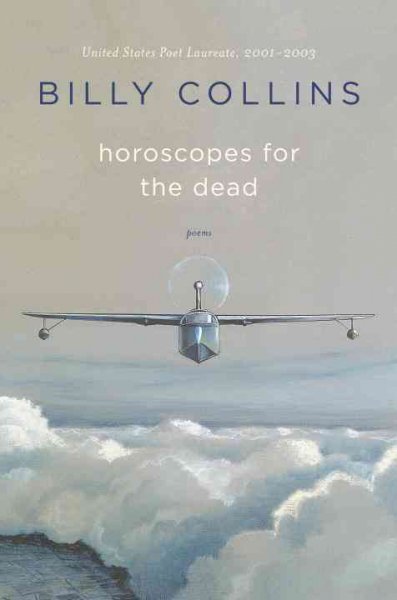
Horoscopes for the Dead: Poems by Billy Collins

As I read through the poems in Horoscopes for the Dead: Poems by Billy Collins, I began to imagine the daily life of the former poet laureate. His to-do list must look something like this:
  • Sit on dock and watch water
  • Ride bike across town
  • Listen to the neighborhood
  • Read Dante
  • Think
  • Write
  • Cook from recipes but vary at will
  • Drink wine with wife
  • Dream all night
Collins admits to a routine "regimen of aimless wandering." I suppose this allows him to observe everything around him without too much involvement. He stays detached, until his wife or a friend require attention. It is good, however, that the poet can not stay clear of complications. Discomfort and annoyance give him more to think about. Again alone and free, he muses and records his mental acrobatics. As readers, we get to play along, enjoying the fun of hanging out with a poet.

As I read, I noted poems to revisit, starting with "The Straightener" on page 5. I can identify with a man wanting to having everything in line in the right place. While he wants his shirts arranged by color, I am more concerned that the short and long sleeves don't mix, but the obsession is similar. I had to smile at "Genesis" on page 23, in which he suggests man began as woman's rib. As a former math major, I also liked "Simple Arithmetic" on page 32, in which Collins subtracts objects from time and space. Eventually, my list of favorites was too long to be meaningful. Perhaps I should ask for the book for Christmas.

Collins, Billy. Horoscopes for the Dead: Poems. Random House, 2011. ISBN 9781400064922.

Monday, June 13, 2011

Nuns Behaving Badly: Tales of Music, Magic, Art, and Arson in the Convents of Italy by Craig A. Monson

While in Florence researching Renaissance music in 1986, Washington University professor Craig A. Monson made the first of his discoveries about Renaissance era nuns. In some Italian convents, they strayed from directives to sing only sacred chants. In times when the opera houses and other entertainments were closed by church and local government officials, either to protect public morals or health (there were many plagues), some convents drew crowds to hear their talented nuns singing secular songs. Often the audience could not see the cloistered nuns, and the songs were sometimes sung during liturgy, but the Italians were desperate for entertainment and enjoyed the music. Monson even found lyrics to bawdy songs sung by nuns who performed in outlandish costumes, but this was not common. Usually, nuns were still behind iron grates, but the locks were sometimes broken. He had to learn more.

So, where do you think Monson found old reports on what sixteenth and seventeenth century nuns did wrong? In the Vatican Secret Archive, of course, which is not exactly secret, as he tells us in Nuns Behaving Badly: Tales of Music, Magic, Art, and Arson in the Convents of Italy. For centuries, the Vatican received frequent reports from all the dioceses detailing investigations into the misbehavior of priests, monks, and nuns. Much of it now seems really petty, such as nuns sneaking out of convents to attend operas (when the operas were allowed by local officials) or using olive oil on their salads when the local cardinal had forbad dressings. Other sins were more serious. Punishments were always serious. One nun spent eight years imprisoned within her convent for going to the opera. Then they let her come downstairs for mass.

At the heart of the matter was a lack of religious commitment by many of the nuns. Many did not even want to be nuns. Some of them were daughters for whom fathers did not want to provide dowries. Others were illegitimate. The Roman Catholic Church had rules that no woman could be compelled to join a convent, but there was little enforcement of the rules. One Italian merchant prince stipulated in his will that upon his death his palace be turned into a convent where a dozen of his unmarried and widowed female relatives would become nuns. They had no choice. These unhappy women eventually burned the palace down to escape, but church officials rounded them up and put them into other convents until it was rebuilt.

Compelling narrative is not Monson's strength, but there are many fascinating stories for devoted history readers to enjoy. The book belongs in larger public library collections. You will probably have to order it through ILL.

Monson, Craig A. Nuns Behaving Badly: Tales of Music, Magic, Art, and Arson in the Convents of Italy. University of Chicago Press, 2010. ISBN 9780226534619.

Friday, June 10, 2011

The Last Jew of Treblinka by Chil Raichman

It has been a serious week here at ricklibrarian, and nothing is more sobering than a Holocaust memoir. In this case, the title is The Last Jew of Treblinka by Chil Raichman. Raichman beat terrible odds to survive a camp which was set up specifically to exterminate Jews. If the Nazis had not had the idea of employing a few Jews to do all of the worst tasks, such as extracting gold teeth from corpses and feeding skeletons into incinerators, he would not have survived. They assumed that they could work Jewish laborers to death in the process, but Raichman kept getting up early every morning and surviving.

After more than a year of unimaginably awful work, he took part in a revolt and escaped. Once he had time to consider what he had been through, he contemplated suicide, but caretakers convinced him to write his story, which he did in 1945 in Paris. It has only recently been translated into English.

The Last Jew of Treblinka is an important reminder of the crimes against humanity committed by the Nazis of World War II. This short memorable book might soon be required reading for history classes and belongs in most public libraries.

Raichman, Chil. The Last Jew of Treblinka: A Survivor's Memory 1942-1943. Pegasus Books, 2011. ISBN 9781605981390

Wednesday, June 08, 2011

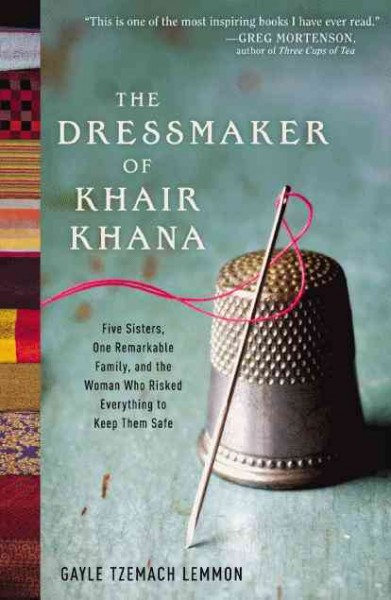
The Dressmaker of Khair Khana: Five Sisters, One Remarkable Family, and the Woman Who Risked Everything to Keep Them Safe by Gayle Tzemach Lemmon

Kirkus Review calls The Dressmaker of Khair Khana: Five Sisters, One Remarkable Family, and the Woman Who Risked Everything to Keep Them Safe by Gayle Tzemach Lemmon the "story of a young woman who outwitted the Taliban to become a successful entrepreneur." "Outwitted" does not seem to me to be the right word. Kamila Sediqi spent more effort on being invisible than on deceiving the Taliban, who took control of Kabul in 1996. She wore a chadris when outside her home as the Taliban demanded. She rarely left her home without her younger brother according to the Taliban rules. She worked at home as the Taliban allowed. And as the story about the rich woman ordering wedding dresses for the next day proved, the Taliban were fully aware of her dressmaking cooperative, which became too big to hide. Sympathetic members of the Taliban actually shielded her - their sisters, wives and daughters wanted dresses, too. Sediqi did break Taliban rules that could have led to her being beaten or imprisoned, but she did so stealthily. She was not "outwitting" the Taliban. Instead, she was doing what cautiously brave people have always done under many repressive regimes.

She was also not aiming to become an entrepreneur. She was simply looking for a way to provide for her sisters and neighborhood women. She left her firm with others to work for an international relief agency when she thought that was the best way for her to help her family and nation.

What distinguished Sediqi was her ability to see the opportunity to exploit and the way to provide work for many in a bad economy. The Dressmaker of Khair Khana is an unusual business story with a heroine steering her company through a particularly dangerous situation. It is also a view into the heart of a tragic country. With its suspense and vivid descriptions, it should appeal to a wide variety of readers, including those who like daring characters and those who like to learn about other cultures.

Lemmon, Gayle Tzemach. The Dressmaker of Khair Khana: Five Sisters, One Remarkable Family, and the Woman Who Risked Everything to Keep Them Safe. Harper, 2011. ISBN 9780061732379

Monday, June 06, 2011

Sugar Changed the World: A Story of Magic, Spice, Slavery, Freedom, and Science by Marc Aronson and Marina Budhos

In the twenty-first century, many of us take sugar for granted. It seems like a basic grocery item essential for every kitchen, and only people who are dieting question our need for the sweetener. The idea that it did not even exist 2000 years ago seems almost unbelievable. What did ancient people sprinkle on their morning cereal or stir into their tea? How could they make cookies, candy, and cakes? Of course, without sugar, the ancients had none of these items.

According to Marc Aronson and Marina Budhos, authors of Sugar Changed the World: A Story of Magic, Spice, Slavery, Freedom, and Science, life was very different before people in India discovered how to produce refined sugar from sugar cane in the first or second century. The recipe was then closely guarded for trade purposes, and it was many centuries before Europeans were able to get small amounts of the "spice." Once they did, they sent explorers to find better trade routes to the Orient to get sugar and the other spices. When they eventually began colonizing distant lands, planting sugar cane and producing sugar was a prime consideration. Sugar plantations, of course, needed cheap labor to stay profitable, so all of the European countries greatly expanded their trade in slaves, mostly from Africa. Piracy flourish, wars were fought, fortunes were won and lost, tropical environments destroyed, and many innocent people were worked to death so wealthy Europeans could have sugar. Ironically, the destructive forces producing sugar also created much of our modern world.

In this book for young readers, the authors contend that much good has resulted in the end, as they tell the stories of their own ancestors who worked in the international sugar trade. Health officials might not totally agree, but such arguments are at this point just academic. The authors do a good job of showing how the desire for sugar drove political, commercial, industrial, and cultural developments. They also describe how we now get our sugar now. Younger and older readers should no longer take granulated sugar for granted.

Aronson, Marc and Marina Budhos. Sugar Changed the World: A Story of Magic, Spice, Slavery, Freedom, and Science. Clarion Books, 2010. ISBN 9780618574926.

Sunday, June 05, 2011

Wizarding World of Harry Potter

Owl in Dervish and Banges windowEntering the Wizarding WorldHogsmeade rooftopsPreparing for a day of butterbeer salesCheck the chimneysHogwarts in the distance
HogwartsSnowman in MayChimney closeupHagrid's HutFlight of the HippogriffSign for Flight of the Hippogriff
Bonnie and RickThe Three BroomsticksKitchen window of the Three BroomsticksBonnie at HoneydukesI like this rooftopBooks in Ollivanders
Ollivanders Sales StaffLine to enter Ollivanders wand shopWitches and wizardsLaura tries butterbeer.Owl PostHogwarts Express

Here is more about our trip to Orlando.

We spent parts of three days at the Wizarding World of Harry Potter. As Universal Resort guests, we got into the Wizarding World at 8 a.m., an hour early, which is the best way to beat the crowds. We also were there late one evening. We were able to ride all the rides, eat in the Three Broomsticks, and browse all the shops. We even road the Forbidden Journey five times!

Friday, June 03, 2011

The American Resting Place: Four Hundred Years of History Through Our Cemeteries and Burial Grounds by Marilyn Yalom

After a vacation during which I read only short novels, I have gotten back to reading history, memoirs, and biography. From among these I read The American Resting Place: Four Hundred Years of History Through Our Cemeteries and Burial Grounds by Marilyn Yalom, with photographs by her son Reid S. Yalom. You might call the book a microhistory because readers learn much about a fairly narrow topic, the ever evolving funeral and burial customs of the United States. It might also be identified as a travel book, for Yalom tells about her journey across the country to visit cemeteries known for their regional and historical importance. Eleven of the seventeen chapters focus on the burial places in specific cities or states, starting with Puritan burial grounds in Boston and ending with remote ethnic cemeteries across Hawaii. Beginning chapters introduce the subject and the final chapters tell about U.S. military cemeteries and current trends in funerary practices.

In the final chapter, Yalom gives readers several ideas to consider, including the increasing popularity of cremation and the possibilities of "green burials." The later could even involve burying your body without casket or chemicals in the woods so you will decompose out of the way naturally. Can enough places like this be found for all of us?

First, however, readers see Reid S. Yalom's evocative photographs, which serve as an effective lure into the text. Indian mounds, wooden crosses, slate headstones with skulls or angels, marble statues, and above ground tombs show the great variety of locations and traditions of American burials. I liked that I recognized some as sites from my own travels, especially the Boston burial grounds where some of my distant ancestors reside. I also liked how the author described historical practices, such as sending gloves to invite people to funerals in Old Boston or inscribing pithy epitaphs on tombstones in the Old South.

The American Resting Place is a book that deserves a measured reading. I took a week at 40 pages a day to get through it. Now I'd like to take a Chicago cemetery tour and visit all my ancestors across the Northeast, South, and Texas.

Yalom, Marilyn. The American Resting Place: Four Hundred Years of History Through Our Cemeteries and Burial Grounds. Houghton Mifflin, 2008. ISBN 9780618624270.

Thursday, June 02, 2011

The Ginseng Hunter by Jeff Talarigo

A little over two months ago I read Nothing to Envy: Ordinary Lives in North Korea by Barbara Demick, which described the lives of six North Koreans who defected in the 1990s or early 2000s. Each had to cross the highly guarded Tumen River north into China to go the long way to South Korea. They found no safety in China which allows North Korean agents to seek and arrest fugitives. Now, I have found a novel that is a perfect companion to nonfiction book. The Ginseng Hunter by Jeff Talarigo is the story about a Chinese man who seeks ginseng in the forests north of the Tumen River and a young North Korean fugitive with whom he falls in love. She swims across the polluted river into the seemingly safe hands of farmers who hide her from Korean soldiers. They then sell her into prostitution. The ginseng hunter meets her on his monthly trip to sell the valuable root in Yanji, a small city near the border between the two Communist countries. At each of their monthly meetings, she describes her past in North Korea.

I chose the book because I liked the cover and wanted a small book to take on vacation. It proved to be a great read, as Talarigo wastes no words in telling a riveting story that illustrates the troubles in two Asian countries. It is widely available in public libraries.

Talarigo, Jeff. The Ginseng Hunter. Nan A. Talese/Doubleday, 2008. ISBN 9780385517393