Monday, November 29, 2010

Packing for Mars: The Curious Science of Life in the Void by Mary Roach

I no longer want to be an astronaut. I've probably missed my chance already anyway, but after reading Packing for Mars: The Curious Science of Life in the Void by Mary Roach, I no longer regret that I have not left the earth's atmosphere. It is nothing like Star Wars or Star Trek out in space. It might never be so for us, for human bodies are not designed for space.

I am glad that I read Roach's book, even if I am now shelving an old dream. With a lot of wit and wisdom, she examines many troublesome aspects of life in space, such as loss of bone mass, difficulty in burping and passing gas, terrible toilets, problematic sex (probably just theoretical at this point), lack of privacy, horrible NASA food choices (sandwich cubes, Tang), and horrible accumulating smells. One astronaut said that his Gemini capsule smelled like a latrine constantly. Of course, conditions were much better in shuttles and space stations than they were in Mercury and Genimi capsules where astronauts stayed strapped into seats most of the time. It was not nice wearing underwear for two weeks when your excretion collection equipment leaked.

Packing for Mars is not all science. Roach recounts the early history of the American and Russian space programs and reveals much about astronauts, scientists, and administrators at NASA. She also questions whether sending humans to Mars even makes sense when robotic probes are so effective and less expensive. Adding living space for humans and storage for two or three years' worth of food complicates matters. Also add fuel for the return trip - no one is advocating one-way trips.

Packing for Mars joins a growing library of straight-shooting science titles by Roach, including Stiff: The Curious Lives of Human Cadavers and Bonk: The Curious Coupling of Science and Sex. That word "curious" keeps appearing. Roach certainly is. Are you?

Roach, Mary. Packing for Mars: The Curious Science of Life in the Void. W. W. Norton, 2010. ISBN 9780393068474

Wednesday, November 24, 2010

Musicophilia: Tales of Music and the Brain by Oliver Sacks

Everyone in my family is ready with book suggestions. My daughter Laura, who is studying music therapy at the University of Iowa, was deeply impressed with Musicophilia: Tales of Music and the Brain by Oliver Sacks. She told me over a year ago that I would enjoy it, so when I saw the audiobook available at the Downers Grove Public Library two weeks ago, I checked it out. I'm glad that I did, for I now understand much more about the mysteries of mental music and the promise of music therapy, an obviously important topic to Laura.

Many readers already know Oliver Sacks as the psychiatrist author of Awakenings, The Man Who Mistook His Wife for a Hat, and seven other books drawn from his clinical studies. Many of these books have been best sellers and the two that I named inspired films.

In Musicophilia, Sacks tells many stories about the profound effects of music on people with varying brain conditions. Some involve genetic abnormalities, while others reveal of the effects of brain injuries. At the center of each story is a real person whose life is shaped by the music in their heads and in the environment around them. Some have unwanted music that plays constantly, rendering sleep and daily life difficult. Others, including some musicians, have lost the ability to recognize music. Some with severe memory loss can only function with the aid of music. Constant music in retail stores makes shopping intolerable for some sensitive individuals. Throughout Sacks sympathetically describes diagnosis, treatment, and results of his cases. I particularly found the discussions of earworms (catchy melodies that you can't dislodge from your mind) instructive; calm surrender can be better than desperately fighting the tunes. I was also fascinated by the chapter on the patients with Williams Syndrome, which restricts scholastic learning but fosters great talent at musical composition; one young woman who could not count to eight wrote beautiful orchestral pieces easily.

Musicophilia is entertaining, and the warmth with which Sacks tells his stories will hook many readers. A few may find the amount of scientific detail tiresome, but I hope many take the time to read Sack's stories. John Lee's lively reading may help some enjoy this important book.

Sacks, Oliver. Musicophilia: Tales of Music and the Brain. Alfred A. Knopf, 2007. ISBN 9781400040810.

Audiobook on compact discs: Books on Tape, 2007. 9 discs, 11 hours. ISBN 9781415942666.

Monday, November 22, 2010

The Tower, the Zoo, and the Tortoise by Julia Stuart

The Tower of London has been a royal palace since the days of William the Conqueror and the site of many events, including the imprisonment of Elizabeth I and the executions of Anne Boleyn and Sir Walter Raleigh. Now with its museums, the Crown Jewels, and tours run by the Beefeaters, it is a highly popular tourist attraction. What it has not been until now is the setting for a highly entertaining 21st century comic novel. Julia Stuart brings the Tower into the present in her second novel The Tower, the Zoo, and the Tortoise.

Of course, being in the present does not mean the past is forgotten in a place like the Tower of London. Beefeater Balthazar Jones repeats the old stories to tourists daily. The past is also Queen Elizabeth II's source of inspiration for moving the wild animals sent to her by other heads of state on the Tower grounds. Elephants, zebra, and many exotic birds belonging to monarchs were kept there before the London Zoo was opened in the 1830s. According to the Queen's equerry, she wants the already popular Tower to draw bigger crowds and a new menagerie will do the trick. Balthazar and his fellow Beefeaters are not pleased. Balthazar is also dismayed to find himself appointed overseer of the menagerie. Other than caring for an aged tortoise, he knows little about animals.

While much that is funny happens at the Tower, my favorite recurring setting in the novel may be the London Underground's Lost Property Office, where Balthazar's wife Hebe and her free-spirited friend Valerie Jennings work. They try to reunite underground commuters with the purses, clothes, lost teeth, books, and such that they leave at stations or on trains. In their collection that has never been inventoried by computer are some rather bizarre items, including Dustin Hoffman's Academy Award, a sarcophagus, and a safe that they have not been able to open. An unusual group of characters visits regularly to deposit or claim lost items.

Knowing what I like, Bonnie recommended the book, which I now suggest to anyone who like quirky British novels.

Stuart, Julia. The Tower, the Zoo, and the Tortoise. Doubleday, 2010. ISBN 9780385533287.

Friday, November 19, 2010

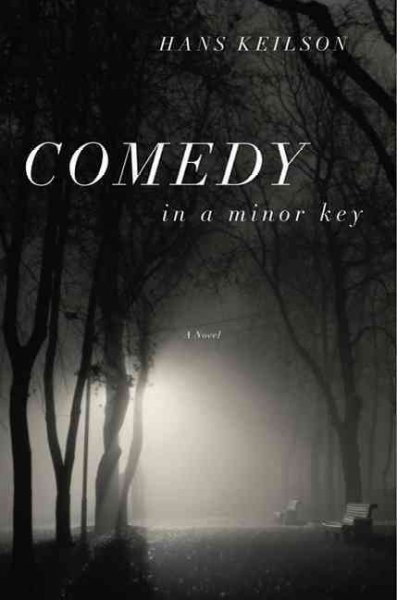
Comedy in a Minor Key by Hans Keilson

Novelist and poet Hans Keilson, a member of the Dutch resistance movement during World War II, wrote about the plight of ordinary, decent Dutch people coping with the Nazi occupation when his memories were quite fresh. His book Comedy in a Minor Key was published in 1947 in the Netherlands but has only now been published in English in the U.S. It was worth the wait.

The Nazi occupation of the Netherlands during World War II has been the subject of numerous books, including the well-known Diary of a Young Girl by Anne Frank. In Comedy in a Minor Key, Keilson tells a less romanticized story. Its central characters are Wim and Marie, newlyweds living in a Dutch village who agree to shelter an older man known to them as Nico through the war. They give him an upstairs room with a secret closet in the wall and ask that he not stand in the windows, which have the standard black shades of wartime. He joins the couple downstairs for meals. Wim takes Nico his afternoon tea. Being quiet people, always discrete in their conversations, they get along fairly well, but each makes little mistakes that let neighbors, friends, and utilities servicemen know that a man is being hidden.

This is not a spoiler alert - Nico dies - the jacket flap tells us right off - and the story goes in directions I did not expect. What Keilson does so beautifully is tell us how sheltering a Jew transformed the young Dutch couple. Wonderfully told and being only 135 pages, Comedy in a Minor Key would be a great choice for book clubs.

Keilson, Hans. Comedy in a Minor Key. Farrar, Straus and Giroux, 2010. ISBN 9780374126759.

Wednesday, November 17, 2010

Global Birding: Traveling the World in Search of Birds by Les Beletsky

Bonnie brings home great books. The latest is a glossy National Geographic guide titled Global Birding: Traveling the World in Search of Birds by Les Beletsky with birding narratives by David L. Pearson. Bonnie had been looking at it and left it on the coffee table. I am afraid that I snatched it for several days, but I did leave her bookmark in place. It is hers again now.

Throughout Global Birding are amazingly beautiful pictures of birds and landscapes from every continent. The colors of some of the bee-eaters, kingfishers, hummingbirds, manakins, tanagers, sunbirds, parrots, berrypeckers, and other exotic birds are brilliant. You don't have to read the text to enjoy the book, but there is much to be learned if you do. I particularly liked the second chapter "The Geography of Birds" about the distribution of birds around the world. The discussions of what the different continents have to attract bird populations explains why North America north of Mexico is relatively bird-poor compared with hotspots, such as Peru, Colombia, Ecuador, and Indonesia. Ironically, the rain forests that attract these birds also make them hard for birders to spot. In his highlighted narratives, David L. Pearson recounts some of his birding efforts. I laughed at his story of seeking Argentina's Yellow Cardinals unsuccessfully for days and then finding two pairs of them sitting on their car's luggage rack as they prepared to depart a bird preserve.

Most of the book is a continent-by-continent assessment of travel destinations. While the author does not recommend actual tour operators or lodges, he points birders to regions and countries and identifies many field guides and websites to help them make arrangements. The text may get a little dry for non-birders, but those working on life lists or just wanting to see the most sought birds will appreciate this handsome book.

Beletsky, Les. Global Birding: Traveling the World in Search of Birds. National Geographic, 2010. ISBN 9781426206405.

Monday, November 15, 2010

Bruce Holmes at Friday at the Ford

Time flies. Over a week has passed since singer/songwriter Bruce Holmes performed at Friday at the Ford, my library's coffeehouse concert series. Flying time was much on his mind. Though he has gray hair and beard, he says that he does not feel old. He is trim, energetic, and seeking new experiences. As he sang in "Marathon," he runs marathons and is a triathlon coach. He is also still seeking romantic women. Many of his songs were focused on his desires, successes, and failures. "Failures make better stories," he admitted.

Bruce is an award-winning songwriter. His inventive wit and melody making have won him prizes at music festivals in Texas and the Midwest. In his songs, he tackles topics that most songwriters and performers standing before a group composed mostly of seniors might fear to address, particularly lustiness, loneliness, and lack of belief in afterlife. His performance was artfully frank and highly entertaining. Bruce had the audience sing along with the chorus of one song, which they did quite well. I think they would have liked to have joined in on a few more. Like Bruce, they do not feel old, and I think they appreciated that he did not just sing safe old songs. They bought most of the CDs that he brought along. I got a couple myself.

In the performance, Bruce sang from his CDs The Old King's Reel and Life's an Intelligence Test. He also performed seven songs from his third CD, which he is still recording. His range of topics and moods were wide, and he never lost the audience. He even asked ahead for an extra half hour so he could sing more songs. Why would I not agree? We had a great evening, for which the library got many thanks.

You can learn more about Bruce at his website.

Friday, November 12, 2010

Reading Somewhere Towards the End: A Memoir by Diana Athill

Citizen Reader had said that I would enjoy reading the memoirs of British editor and publisher Diana Athill. CR had said that Athill was refreshingly frank in stating her no-nonsense opinions on many uncomfortable topics (loss of interest in sex, the resentment of being an unprepared caregiver, aging, death) and that her books were short and compelling. Reading Somewhere Towards the End: A Memoir by Athill, I found that CR was right. It is a book I could have read quickly but chose to read a little at a time.

Somewhere Towards the End is Athill's fifth and probably last book of memories. She was in her late eighties when she wrote it and ninety when it published in 2008. Her first memoir, Instead of a Letter, was published in 1962. The first was a coming-of-age memoir, and in the subsequent titles, she has remembered old friends dying, her many love affairs (one of which was abusive), gardening, and working as an editor for V. S. Naipaul, Jean Rhys, and other literary novelists. In her latest book, she discusses aging, her loss of interest in even pretending to care about sex, her wish not to linger in death, and her lack of fear of ceasing to exist.

I particularly found chapter 12 interesting. Athill says that she has lost interest in most fiction and that now she most enjoys reading biography. She goes on to discuss books about novelist Gustave Flaubert, archeologist Gertrude Bell, adventurer T. E. Lawrence, naturalist Charles Darwin, and industrialist Josiah Wedgwood. The range of characters is wide but probably understandable for someone who spent her entire life focused on books.

Will Somewhere Towards the End really be Athill's last book. She has retired before and is only ninety-two. Give her enough time and she may find something else she wants to say.

Athill, Diana. Reading Somewhere Towards the End: A Memoir. W. W. Norton, 2008. ISBN 9780393067705.

Wednesday, November 10, 2010

I Am Nujood, Age Ten and Divorced by Nujood Ali and Delphine Minoui

Spoiler alert: I tell how the story ends, but even the title does that. The beauty is in the details.

The most gripping story out of Yemen in 2008 was not Al Queda terrorist attacks targeting Americans, Europeans, or Muslims who do not agree with Al Queda's views. Instead, the world was surprised by the story of a girl who might have been ten years old at the time asking the Yemeni courts for a divorce from her husband, a man at least three times her age. She might only have been eight or nine. Her age is not certain because she has no birth certificate. Her mother who is almost always pregnant can not remember when Nujood was born. The mother can not even remember the order in which her children were born. What was certain was that Nujood was way under the age of fifteen, which was an unenforced age for marriage. The story is told in I Am Nujood, Age Ten and Divorced by Nujood Ali and French journalist Delphine Minoui.

The surprise in the story is not the situation. According to the authors, more than half of Yemeni girls are sold into marriage before the legal age. The surprise is that Nujood ran away from her husband and dared ask the courts for help. Luckily for her, she reached a sympathetic judge who got her help from a women's rights lawyer. Other judges might not have been willing to risk offending "traditional" Yemenites. The judge with the help of other officials took the unprecedented step of arresting both Nujood's husband and father as part of the divorce case.

The crimes recounted (with honesty but remarkable tact) in the story of Nujood and her family are many. Her oldest sister was quickly married after a rape and her second sister sent to prison for adultery with the oldest sister's husband (she may have actually been kidnapped but women are always considered guilty in Yemen). The family had to quickly move from their village to the city after Nujood's father attacked men who question his honor. The family was reduced to begging in the streets. The father illegally sold Nujood, and she was raped and beaten by her husband. The reader gets a sense of Yemen as a very bad place. That a mostly illiterate girl could rise out of this mess is a miracle.

I Am Nujood, Age Ten and Divorced is not a happily-ever-after-ending story. In the afterward, the coauthor reports that Nujood has returned to her father's house, for there is nowhere else for her to go. Her older brothers are quite upset that she has brought great shame on them. Her lawyer tries to protect Nujood and her younger sister and get them into schools. Gifts from people touched by Nujood's story and her book earnings support the family (placating the brothers somewhat). Nujood plans to use book money to get an education and become a women's rights lawyer herself. The reader is left hoping that she can succeed.

Both teens and adults should read this book, which should encourage people in any culture to escape abusive relationships.

Ali, Nujood and Delphine Minoui. I Am Nujood, Age Ten and Divorced. Three Rivers Press, 2010, c2009. ISBN 9780307589675

Monday, November 08, 2010

The Grace of Silence: A Memoir by Michele Norris

The parade of books from National Public Radio is long and impressive. Beginning with Susan Stamberg, Bob Edwards, and Scott Simon, and continuing with a host of foreign and national correspondents, news analysts, science editors, and even librarians, many from the NPR staff have written books that have been received well by the critics and the book-reading public. Last year my library stocked one of its monthly book displays with titles by NPR journalists. I especially liked how we brought together a great variety of subjects, including some fiction and memoirs as well as the expected books spun off from reporting on current events. With many NPR listeners among our cardholders, author name recognition was high, and the books circulated well.

All Things Considered cohost Michele Norris has now added to the list by writing The Grace of Silence, a thoughtful memoir about her family being the first blacks in a Minneapolis suburban neighborhood. In it, she tells about how her father and mother hid many of their bad racial experiences from her, wanting her to grow up without prejudice or fear. They strove to be average Americans enjoying the prosperity and freedom that the 1960s and 1970s offered and rarely let down their guards to show any irritation at slights and insults. In the 1960s, they tried with enthusiasm to outdo whites at being good neighbors: clearing their sidewalks of snow first, keeping their yard immaculate, and driving nice (but not flashy) cars. In the 1970s, they took on some of the symbols of black pride. Norris tells a particularly interesting story about her mother insisting she get an Afro.

Without the skills of a journalist, Norris might never have discovered that her very proper grandmother once portrayed Aunt Jemima for Quaker Oats and that her father was shot by police in Birmingham, Alabama just weeks after returning from World War II. Getting to the roots of these stories and measuring their effects on her family took Norris years of research and interviewing family, friends, and foes. The result of her efforts is a family story that reflects on the history of our country. Entertaining and with only 174 pages of text, The Grace of Silence would make an excellent choice for book discussions. Teens might also enjoy the coming of age aspects of the memoir.

Norris, Michele. The Grace of Silence: A Memoir. Pantheon Books, 2010. ISBN 9780307378767.

Friday, November 05, 2010

The Hedgehog's Dilemma: A Tale of Obsession, Nostalgia, and the World's Most Charming Mammal by Hugh Warwick

We do not have native hedgehogs in the Americas. The little spiny mammals that wander about at night inhabit most of the planet but disappeared from the Western Hemisphere during one of our mass extinctions millions of years ago. Since the 1980s some dwarf hedgehogs from Africa have been available in American pet stores, but most of us only know the mammal from Beatrix Potter stories, Monty Python skits, or video games.

I am not sure why an American publisher decided to reprint Englishman Hugh Warwick's The Hedgehog's Dilemma: A Tale of Obsession, Nostalgia, and the World's Most Charming Mammal. Was the pet craze responsible or do books about British topics attract Anglophiles? Do enough Americans see Warwick on BBC Wildlife to have made his book viable in the market? Whatever, it is here and it is pretty good reading for someone who likes to know what he or she might encounter tromping around in British woods and flying to remote China in search of rare hedgehogs.

According to Warwick, people have ridiculous feelings about British hedgehogs, which he describes as "smelly, flea-ridden, solitary, prickly, and nocturnal." Other than roll up into a ball when threatened, they do not really do much that can be called cute. But he and many other people love them. They put food in their gardens for night visitors, who actually do quite well on their own eating insects. People rush injured or sick hegdehogs to a growing network of animal rescue centers, including the Tiggywinkles Wildlife Hospital in Buckinghamshire. Many belong to the British Hedgehog Preservation Society.

The mass neglect and removal of British agricultural hedges has reduced the overall hedgehog population, but the hogs who have moved into verdant suburbs are doing well. As houses with gardens are replaced by multi-unit buildings and parking lots, hedgehogs are again being displaced. Warwick and his friends at the BHPS are concerned and fighting for hedgehog rights.

You'll learn all this and much more if you read The Hedgehog's Dilemma, which is available in nearly 300 American libraries. If your library does not have it, it will gladly borrow it from one that does.

Warwick, Hugh. The Hedgehog's Dilemma: A Tale of Obsession, Nostalgia, and the World's Most Charming Mammal. Bloomsbury, 2008. ISBN 9781596914773

Wednesday, November 03, 2010

The Madness of Edgar Allan Poe by David Rice

For nearly ten years, Bonnie and I have been attending outdoor productions of Shakespeare plays by First Folio at Mayslake Peabody Estate Forest Preserve in Oakbrook, Illinois. We have taken picnics and stayed for both the tragedies (Hamlet, MacBeth, Richard III) and the comedies (Twelfth Night, Much Ado About Nothing, Midsummer Night's Dream) under the stars. Despite sticky heat or evening cold, we have always enjoyed lively and imaginative performances. We go almost every summer.

Starting in 2004, First Folio moved into Mayslake Hall, the mansion/monastery that we had always viewed with curiosity. It took us several years to move with them, but in 2008 we saw the hilarious adaptation Jeeves Intervenes by P. G. Wodehouse, staged in the mansion's old library. We were a bit disappointed by Noel Coward's Design of Living in 2009 but loved Jeeves in Bloom in winter 2010. The latter play was staged in the mansion's chapel, a soaring space well suited for intimate theater.

So we were gung-ho to see First Folio's third staging of The Madness of Edgar Allan Poe by David Rice, one of the theater company's founders. We even managed to get tickets for Halloween Night. I was also excited to learn that each scene of the play was staged in a different room of the mansion. We were getting to join our love of theater with our hobby of touring old buildings.

The play lived up to its billing and my imagination. With morbid flare, the players acted out scenes both from Poe's life and from his poems and short stories. We were thrown into nearly total darkness in "The Pit and the Pendulum" and had the murderer right in our faces in "The Tell-Tale Heart." Diane Mair was as I would imagine the petite Virginia Poe, the tortured author's child bride. Understudy Michael Aguirre was a sympathetic yet disturbing Poe.

I'd like to go again.

Monday, November 01, 2010

How to Build a Dinosaur: Extinction Doesn't Have to Be Forever by Jack Horner and James Gorman

Anyone who has seen the movie Jurassic Park knows the theory that dinosaur DNA might be used to recreate living dinosaurs. Just get a little from an ancient mosquito (who stung a dinosaur) now encased in amber, incubate in a suitable egg, and watch dinos grow. While not totally ruling that way out, noted paleontologist Jack Horner now thinks there is a way to resurrect the past using something much more common than preserved dinosaur DNA - the common chicken embryo. He tells how in How to Build a Dinosaur: Extinction Doesn't Have to Be Forever.

Why a chicken? Horner has long held that we still have avian dinosaurs, which we call "birds." Knowing that modern DNA retains code from all the species from which it evolved, the dinosaur scientist poses that if we learn how, we can switch ancient dinosaur genes on and off in the chicken embryo to reestablish tails, teeth, limbs, etc. Throw the right combination of genetic switches and we get a chicken that looks like a dinosaur. It would still be a chicken genetically, but scientists could study the resulting creature and its retro-features. The technical knowledge gained could also be applied to human prenatal medicine to reduce birth defects.

Horner and his coauthor James Gorman do a good job of explaining scientific method, paleontology, and genetics to nonscientists. The early chapters of How to Build a Dinosaur can be read just for descriptions of Montana and learning about the work of dinosaur hunters. General readers may want to skip a bit in the middle chapters discussing genetics, but they risk missing some of the key points when they do. The final chapters include discussions of various ethical issues as well as closing arguments.

Horner has long been one of the most vocal and popular paleontologist and is followed by many dino-fans. His latest book belongs with his others in many public libraries.

Horner, Jack and James Gorman. How to Build a Dinosaur: Extinction Doesn't Have to Be Forever. Dutton, 2009. ISBN 9780525951049