Tuesday, June 30, 2009

Biography Pop Quiz: Questions from Real Lives Revealed

Roche, Rick. Real Lives Revealed: A Guide to Reading Interests in Biography. Libraries Unlimited/ABC-Clio. 2009. 601p. ISBN 9781591586647.

Real Lives Revealed: A Guide to Reading Interests in Biography officially publishes today. It is the second book in the Real Stories Series, following The Inside Scoop: A Guide to Nonfiction Investigative Writing and Exposes by Sarah Statz Cords. Instead of writing a review of my own book, which would hardly be unbiased, I offer a biography pop quiz. All of the answers can be found in my book. How fast can you get your hands on one? I will reveal the answers next week.


Multiple Choice Questions

1. In Eminent Victorians, Lytton Strachey did not write about

a. Florence Nightingale
b. Matthew Arnold
c. Henry Edward Manning
d. Charles George Gordon

2. Supreme Court Justice John Marshall wrote a biography of

a. Thomas Jefferson
b. John Adams
c. George Washington
d. Thomas Paine

3. Sheriff Pat Garrett shot the outlaw know as

a. William H. Bonney
b. Billy the Kid
c. Henry McCarty
d. all of the above

4. Journalist Martha Gellhorn died from

a. natural causes
b. suicide
c. cancer
d. malaria

5. On Illustrious Men (De Viris Illustribus) was written by

a. Cornelius Nepos
b. Gaius Suetonius Tranquillus
c. Diogenes Laertius
d. all of the above

6. Singer Michael Jackson claimed that his life was changed by reading a biography of

a. John Lennon
b. Harry Houdini
c. P. T. Barnum
d. Paul Robeson

7. Elizabeth Barrett Browning had a dog named

a. Chaucer
b. Sappho
c. Flush
d. Puck

8. President Abraham Lincoln's friends did not included

a. Joshua Speed
b. David Herbert Donald
c. Orville Browning
d. William Herndon

9. After their baseball careers ended, Ty Cobb and Babe Ruth developed a friendship while

a. playing tennis
b. betting on horses
c. golfing
d. fly fishing

10. J. Randy Taraborrelli has not written a biography of

a. Madonna
b. Cher
c. Barbara Streisand
d. Elizabeth Taylor


True or False?

11. Ray Charles learned to play boogie-woogie piano before he was classically trained.

12. The pirate William Dampier was also a noted scientist who chartered ocean currents and drew tropical birds.

13. Ballet dancer Rudolf Nureyev was born on a train near Lake Baikal in Siberia.

14. Martha Washington burned all of her letters to and from her husband George.

15. Jonas Salk suffered from polio as a child. He met Franklin Roosevelt in a New York hospital.


Bonus Question

16. Name the author of the first biography?

a. Samuel Johnson
b. James Boswell
c. Plutarch
d. Ion of Chios


Here's a hint for those who can use my book to answer these questions. Two of the questions are drawn from the Chronology of Biographical History that I include in the History of Biography at the front of the book. One question comes from Appendix B: Top Biographers. The others come from the 600 book reviews.

Monday, June 29, 2009

At Last the 1948 Show

"And now for something completely different."

No, it is not Monty Python, it's At Last the 1948 Show, a television sketch series from ITV London that was a parent of Monty Python. Marry At Last the 1948 Show to Do Not Adjust Your Set, and you get the baby Monty Python's Flying Circus.

Crazy, silly, zany, weird, uproariously funny. Viewing a five-episode DVD set of the show, Bonnie and I laughed Saturday evening away. We also saw a lot of what Python was going to be. John Cleese was already a fully mature John Cleese. Right off the bat in episode one he plays a psychiatrist who will not allow the client to recline on the couch fearing that the latter might be a bed-wetter. Tim Brooke-Taylor, the client, can hardly get a word in as Cleese talks and talks and talks. Graham Chapman is already a talented Graham Chapman-like player. He plays a policeman several times. He even plays a policeman in drag. There is also Marty Feldman in his first acting role. He goes completely bonkers in some scenes! In other scenes with Cleese, he seems to foreshadow the coming of Michael Palin. Finally, there is Aimi MacDonald, whose "moments" link sketches and remind me of the female comedians in the 1968 American series Rowan & Martin's Laugh-In. At Last the 1948 Show came first in 1967.

Eric Idle is an extra. In "Thief in the Library," he gets to play a librarian. Shhhh!

"The Four Yorkshiremen" is touted as the most famous sketch. I think my favorites are "The Chartered Accountant Dance," "A Train Carriage, and "Life Insurance for the Accident Prone Man."

Viewers may be surprised to find At Last the 1948 Show is in black and white. Color came to ITV the next year. According to an interview with Tim Brooke-Taylor on the DVD, the show was somewhat regional and broadcast to only parts of Great Britain. The two DVD set includes five episodes, and its box gives the impression that it is the complete series. Aimi MacDonald in her links, however, refers to scenes you don't see, as does Brooke-Taylor in his interview. BFI Screenonline and IMDB indicates that there were thirteen episodes. Wikipedia explains that the DVD is a compilation that was shown on Swedish television. The BBC destroyed most of the original videotapes. That's so sad, as I'd like to see more.

Friday, June 26, 2009

Read On ... Women's Fiction: Reading Lists for Every Taste by Rebecca Vnuk

What is women's fiction? According to Rebecca Vnuk in her introduction to Read On ... Women's Fiction: Reading Lists for Every Taste, the genre includes novels about women characters and their relationships with family, friends, and men. These novels tend to be written by women, and most of the readers are women. Separating them from romance novels is at times difficult. Women's fiction does not have to include a happy ending, as the romances do. Vnuk points to two trends in women's fiction reflected in book sales and library circulation: lighthearted Chick lit and more serious novels examining social issues, which she describes as "Oprah-esque."

I started my examination of Vnuk's guide with the index. I found four books that I had read among the many unfamiliar titles: The Bonesetter's Daughter by Amy Tan, Dream When You're Feeling Blue by Elizabeth Berg, Fried Green Tomatoes at the Whistle Stop Cafe by Fannie Flagg, and Jane Eyre by Charlotte Bronte. I may have also read Emma by Jane Austen, but I am not certain after all the film and television adaptations that I have seen. I thought that I might find more, such as the novels of Barbara Pym or Muriel Spark, which I find fascinating. Vnuk, however, explains in her introduction (which I read after scanning the index) that she focused on contemporary authors, adding only a short list of classical authors at the end.

Like the other guides in the Read On Series, Read On ... Women's Fiction in divided in to five sections group titles according to the appeal factors of character, story, setting, mood, and language. Each list has a common factor, such as Christmas gatherings or war-time love. I think my favorite list titles are "Putting the Fun in Dysfunctional" and "I Still Miss My Ex, But My Aim Is Getting Better."

Read On ... Women's Fiction is going to be handy to have around the library. Jamie and Annie may get some book list and display ideas from it. It will give me some titles to suggest to the next reader who has finished the Sophie Kinsella books. At Thomas Ford, we are going to circulate it and the other Read On Series guides to let readers discover more titles on their own.

Vnuk, Rebecca. Read On ... Women's Fiction: Reading Lists for Every Taste. Libraries Unlimited/ABC-Clio, 2009. ISBN 9781591586340

Wednesday, June 24, 2009

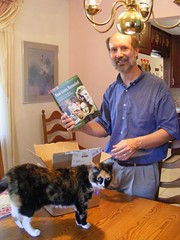
The book has arrived!


The book has arrived!
Originally uploaded by ricklibrarian.
I have to grin! The book is here! As soon I came home today, Bonnie revealed that a box from Libraries Unlimited/ABC Clio had arrived. Inside were my personal copies of Real Lives Revealed: A Guide to Reading Interests in Biography. We took the heavy box to the dining room table where Caramel watched closely as I opened the top flaps and removed a copy. Bonnie caught it all for the ages.

I finally know that the book is a total of 601 pages. That includes 600 reviews, a chronology of biography, three appendices, and three indexes. I hope many readers and librarians find them useful.

The official publication date is next Tuesday, June 30. There will be copies at the American Library Association Conference in July.

The Lost Art of Walking: The History, Science, Philosophy, and Literature of Pedestrianism by Geoff Nicholson

The Lost Art of Walking: The History, Science, Philosophy, and Literature of Pedestrianism by Geoff Nicholson is my kind of book. It is partly a microhistory of walks, walkers, and walking, telling stories from ancient history to the space age. It is also a memoir, as Nicholson recounts his own walks, both in the places he has lived and in exotic locations that he has visited for the sake of walking.

While I liked the stories featuring characters from history and literature, I especially enjoyed Nicholson's own story. In the first chapter, he tells about walking around Los Angeles, where few people ever leave their houses not in an automobile. On foot he sees things that many people never see. Near the end, he recounts growing up in the "county estates" (public housing) in Sheffield, England. Even as a youth he had a passion for walking. I liked this quote:

"... when I was eleven years old or so and it was reckoned that even though I was too young to be left alone in my parents' house, I was old enough to be allowed to wander the streets of Hillsborough."

The oddest story may have been about family vacations in Blackpool. Their lodgings were only for the night. They had to be out by 8:00 every morning and were not allowed back in until 5:00 in the afternoon. The family, parents and young children, walked through the tourist town, back and forth, all day. Because his parents were frugal, their entertainment options were very limited. It is surprising that he grew up to enjoy vacations and spend them walking.

Thanks to Maggie for recommending The Lost Art of Walking. I enjoyed it thoroughly.

Nicholson, Geoff. The Lost Art of Walking: The History, Science, Philosophy, and Literature of Pedestrianism. Riverhead Books, 2008. ISBN 9781594489983

Tuesday, June 23, 2009

Reasons to Read Biography

In the June 2009 issue of Booklist, David Wright states that he can think of only two good reasons to read biography. He thinks it is a good way (1) to learn history and (2) to "get the dirt." He enjoys exposés and confessional memoirs that reveal inner demons. In the same issue, Kaite Mediatore claims that she enjoys reading about "dames," which she describes as strong, good-humored women worth admiration. Both David and Kaite review five books, some of which are old and rare.

Since they have opened the conversation, it seems a good time to bring out my list of reasons to read biography.

Reason 1: To discover fascinating people.

Harry Harlow is one such person. He was an enthusiastic experimental psychologist at the University of Wisconsin in the 1950s, when he discovered how important parental care was to the development of young monkeys. He became a proponent of love featured on CBS Television news. Ironically, he ignored his own wife and children. Deborah Blum examines the life of a contradictory character in Love at Goon Park: Harry Harlow and the Science of Affection.

Reason 2: To rediscover people we think we know well.

In our mental processing of everything that we have learned about historical figures, such as George Washington or Abraham Lincoln, we sometimes reduce them to a few facts, such as "general who became our first president" or "president who freed the slaves." In doing this we forget what truly made them remarkable. Luckily for us, biographers recollect the stories and present them fresh and new. Consider John Adams. Many people considered him pretty old and dry before David McCullough wrote his intimate biography, simply called John Adams.

Reason 3: To reassess infamous characters.

Margaret Sanger was a nurse who saw tremendous suffering in the slums of New York City in the early twentieth century. She began a crusade for birth control, which included the distribution of honest and frank information about sex. For this she was condemned by many religious, political, and law enforcement officials. Ellen Chesler recounts the life and times of a woman ahead of her times in Woman of Valor: Margaret Sanger and the Birth Control Movement in America.

Reason 4: To get the story behind legendary characters.

There really was a Queen Boudica who tried to expel the Romans from Britain, but she was not the mass murderer that some legends suggest. Vanessa Collingridge uses archeological evidence to redraw the queen's image in Boudica: The Life of Britain's Legendary Warrior Queen.

Reason 5: To get the dirt. (A nod to David)

Sir Thomas Malory is often credited with establishing the tradition of knightly chivalry. According to Christina Hardyman, he was really a rapist, murderer, and thief. She makes her case in Malory: The Knight Who Became King Arthur's Chronicler.

Reason 6: To find a hero, warts and all. (A nod to Kaite)

Ethiopian widow Haregewoin Teffera did not want to foster an AIDS orphan, but her priest insisted. Once she cleaned the girl, she fell in love and began working for all her country's orphans. Melissa Fay Green describes Teffera's life and work in There Is No Me Without You: One Women's Odyssey to Rescue Africa's Children.

Reason 7: To learn history through the life of an individual.

When the heads of her friends began to fall in Paris, Marie Tussaud was there to catch them and cast them in wax. Kate Berridge recounts how a survivor of the French Revolution became a entertainment pioneer and a very rich woman in Madame Tussaud: A Life in Wax.

Reason 8: To experience adventure from the safety of one's armchair.

Despite the dangers of travel over the Andes Mountains and on the Amazon River in the eighteenth century, Isabelle Godin des Odonais set forth to cross the South American continent to rescue her husband. Robert Whitaker tells an excite tale in The Mapmaker's Wife: A True Tale of Love, Murder, and Survival in the Amazon.

Reason 9: To celebrate one's culture.

Why did the life of an entertainer mean so much to his many fans? Novelist Bobbie Ann Mason explains in her compact biography Elvis Presley.

Reason 10: To enjoy a good book.

Take any of the nine titles from above and insert here.


Ten seems a nice number at which to stop. You might write some more reasons of your own after reading a few good biographies.


My book Real Lives Revealed: A Guide to Reading Interests in Biography publishes next week. It includes reviews of all of these titles, plus 591 more.

Monday, June 22, 2009

The Remarkable Life of William Beebe: Explorer and Naturalist by Carol Grant Gould

This is the entry for an adventure biography reviewed in my upcoming book Real Lives Revealed: a Guide to Reading Interests in Biography. William Beebe was a romantic figure who led nearly fifty expeditions for the New York Zoological Society and the American Museum of Natural History. Due to his station as director of the society's Department of Tropical studies and the wide popularity of his travel memoirs, he knew every important conservationist from Teddy Roosevelt to Rachael Carson. He also knew Noel Coward, Will Rogers, and many smart, beautiful women.

Gould, Carol Grant
The Remarkable Life of William Beebe: Explorer and Naturalist. Island Press/Shearwater Books, 2004. 447p. ISBN 1559638583.

In 1932, long before Jacques Cousteau explored the oceans, William Beebe (1877–1962) broadcast on the radio from a bathysphere a half a mile below the ocean surface, describing fish and other creatures never before seen by humans. Long before the television age of David Attenborough, Beebe traveled to remote jungles seeking out rare and new species of animals and plants for his magazine articles and books. As the first ornithologist for the Bronx Zoo, the energetic scientist collected and studied birds from around the globe. Given access to Beebe’s papers at Princeton University , Gould has written an adventure story about a now-forgotten celebrity of early twentieth century zoology that will appeal to viewers of televised nature programs as well as other readers.

Subjects: Beebe, William; Explorers; Naturalists; Zoologists

Now try: Beebe’s own books mix memoir and science. His titles include Two Bird Lovers in Mexico, Half Mile Down (about deep sea diving), and Galapagos: World’s End. A more recent naturalist who will go anywhere to get a story is David Attenborough. He recounts his career of making nature films in Life on Air: Memoirs of a Broadcaster. Zoologist Gerald Durrell describes growing up with animals in his highly entertaining My Family and Other Animals. Carl Sagan was another enthusiastic scientist who doubled as media celebrity. Carl Sagan: A Life in the Cosmos by William Poundstone captures a life in the pursuit of knowledge that is free of difficult science reading. Peter Matthiessen has also traveled the world seeking to see wildlife in natural habitats. In The Snow Leopard he describes his attempt to see the reclusive cats on the rocky cliffs of the Himalayan Mountains.

Friday, June 19, 2009

Juliette Morgan, Librarian for Racial Equality

In a sidebar in the book that I reviewed yesterday, Claudette Colvin: Twice Toward Justice, Phillip Hoose briefly tells about white support for the boycott of the Montgomery buses by African Americans in 1955 and 1956. He devotes two paragraphs to librarian Juliette Morgan, who was terrorized by white supremacists after her letter stating her admiration for blacks who stood up against repression ran in the Montgomery Advertiser newspaper. Hoose says that after months of death threats and constant harassment through the night, she committed suicide.

Wanting to know more, I found "Juliette Hampton Morgan: A White Woman Who Understood" on the website Teaching Tolerance, A Project of the Southern Poverty Law Center. This article tells how Morgan, a woman with deep Southern roots, began calling for an end to Jim Crow laws in 1939, sixteen years before the boycott. For years she wrote letters to the Montgomery Advertiser and participated in interracial prayer groups. For her outspoken stand, she lost jobs, lost friends, and became estranged from her family. Despite her isolation, the Carnegie Library hired her as a reference librarian. When her letter in support of the boycott ran in the newspaper, the city's mayor demand that she be fired, but the library refused, even when the mayor withheld library funding.

According my calendar calculations, Morgan survived through the boycott and retained her job past the crisis, but the strain must have taken its toll. Interracial violence continued in the city for years after the boycott. Severely depressed, she resigned from the library on July 15, 1957. Her mother found a bottle of sleeping pills beside her body the next morning.

The Reverend Martin Luther King mentioned Morgan in his book Stride Toward Freedom, and she has been remembered with induction into the Alabama Women's Hall of Fame. We need a librarian's hall of fame to remember brave librarians, such as Morgan and Judith Krug.

Thursday, June 18, 2009

Claudette Colvin: Twice Toward Justice by Phillip Hoose

I continue to read juvenile biographies. The only thing "juvenile" about them is that they are intended for older elementary or middle school students. The writing in many of these serious books is honest and economic. Though they are on the short side, their authors include enough details to tell their stories well. Horrible injustice is described truthfully, and the courage of individuals is lauded. If these books were formatted and bound as typical adult nonfiction, they might easily pass as such.

Claudette Colvin: Twice Toward Justice by Phillip Hoose is one such book. In 133 pages, Hoose tells the mostly forgotten story of a teenage African American who was arrested in early 1955 for not giving up her seat on a Montgomery, Alabama city bus, nine months before Rosa Parks also refused to relinquish her seat. Few people praised Colvin for her stand. Most of her classmates in high school shunned or ridiculed her for getting in trouble. She lost her case and was sentenced to a year of probation. Despite the trouble that resulted from her initial stand, she later joined in a long shot case in Federal Court to declare Montgomery's segregating of buses unconstitutional. Her testimony helped win that case of Browder v. Gayle, which was later affirmed by the U. S. Supreme Court.

Colvin's story is not, however, triumphant. Because she was an unwed mother, she was even shunned by many leaders in the civil rights movement. It was many years after the events that her role was "rediscovered" and celebrated. In the meantime, she lived a hard life.

Readers learn a lot about Montgomery, the South, and the fall of the old racist ways in Claudette Colvin: Twice Toward Justice. It's not just for kids.

Hoose. Phillip. Claudette Colvin: Twice Toward Justice. Farrar Strauss Giroux, 2009. ISBN 9780374313227

Wednesday, June 17, 2009

Helping Job Hunters: Recommendations and Resources for Librarians

Forty or fifty librarians met at the Oak Brook Public Library for a program about assisting job seekers in the public library called Helping Job Hunters: Recommendations and Resources for Librarians yesterday. Starting at 9:30 a.m. and ending at 1:30 p.m., this combined DuPage Library/Metropolitan Library systems offering was an oddly-timed two-thirds day workshop (by the time you add travel), but I am glad I did not leave early to eat lunch. The last hour and a half had most of the practical library service suggestions. Besides, there were snacks, including a delicious vegetable tray, to tide us over until lunch.

The main presenter was Diane Shelton, a career counselor whose company is called Follow Your Instinct. She spoke about the emotions of job seekers and the role of librarians helping them. She knew of what she spoke, having been laid off by the University of Chicago Hospitals in March 2009. She said that in many cases receiving a pink slip is a total surprise. In her case, the hospital had assured everyone in her department only two days earlier that there would be no cutbacks. Like many suddenly unemployed people, she then went through the stages of job loss grief. Being a counselor may have tempered her grief, but the sting was still there.

Shelton spoke first about the emotions of the unemployed, who feel that they have lost control of their lives. She explained empathetic/reflective listening skills, which librarians and other professionals utilize to help the jobless. Attentive, non-judgmental listening is the first of the services that we need to provide. Shelton stressed that it is easy to discourage these already fragile clients and provided a long list of things not to say, including:

  • "I know how you feel."
  • "It's part of life's plan."
  • "Look what you have to be thankful for."
  • "This is behind you now: it's time to get on with your life."
  • Statements beginning with "You should" or "You will."

Letting them grieve, you listen and help them with their practical concerns.

Part of the discussion centered on how to help the seemingly "powerless." Several librarians recounted how they have helped people without any computer skills find their way through online job search and application procedures. When to stop "helping" was a big question, as some of these people would like to have constant hand holding. Some would also prefer the library staff do all of their typing and job seeking. Shelton emphasized that we must not enable these people to become burdens on the library. That helps neither the library nor the job seekers, who must ultimately take responsibility for reordering their lives. Teach the jobless to help themselves.

The second half of the program was a panel discussion. Jeanne Friedell spoke about how the Oak Park Public Library started a job club that meets on Tuesdays. Two professional job coaches are managing it for the first four months. Librarians and outside speakers give 30 minute talks, and the participants learn to network.

Jane Klingberg from Triton College discussed their program to help job seekers with their resumes. I learned that a lot has changed since I last put together my own resume. Resumes should be one page; only the most experienced job seekers should venture to use a two-page resume today. She recommended writing in 8-point font to get the content into a nicely formatted single page. Only include work and experiences from the past ten years on your resume. Her place of employment recommends starting the resume with a statement of the job seeker's objective; studies show that half of the employers really want this and the other half do not. The second element on the resume should be a summary of skills aimed at the specific position advertised. She said that resume templates from Microsoft Word should be avoided because 1) they are hard for unskilled computer users to manipulate and 2) employers are tired of looking at the cookie-cutter results.

Fidencio Marbella spoke about programs for job seekers at the Melrose Park Public Library. In workshops at his library, he has incorporated roll playing to make the point that resumes have to look good to be considered. A volunteer plays the employer going through resumes. Fidencio gives that volunteer a stack of sample resumes and five seconds to evaluate each. The point is quickly made that appearance is critical. He also described how his library got grants and solicited funds from area businesses for their job programs. (Fidencio impressed me as a speaker who can draw an audience into his subject. I'd welcome hearing him discuss other topics.)

Chris Schabel, who was once laid off by Sears, described the job resource center that the Aurora Public Library has set up. The room has computers with two-hour sign-ins for job seekers and a collection of career materials. Chris said that she knew from experience that many area employers advise applicants get help with online applications at the public library.

There were numerous website recommendations. Snagajob.com was recommended for people seeking low paying jobs, which are often difficult to find in many of the other online job services. Klingberg recommended librarians bookmark the soon-to-be-remodeled CCJobNet.com, a source put together by the junior colleges of northern Illinois; these Chicago area job listings do not often make the national job boards. Several speakers recommended Indeed, a mega-search across many job banks.

Tuesday, June 16, 2009

Liberty and Libraries: Playing with Quotations

Have you ever accidentally changed a word in a quotation and still found it meaningful? I can not reconstruct why, but on Saturday I started thinking about "life, libraries, and the pursuit of happiness." It sounded so good, I suspected that I had actually heard it before, and I had. I searched the Internet and found the phrase has been used many times.

I then wondered whether "library" or libraries" could be substituted for "liberty" in other quotations and still make some sense. So I gathered "liberty" quotations and tried the word switch on them. Many did not make any sense, but a few did. Here are the ones that I liked. Some of the best are near the end.


"No man's life, library, or property are safe while the legislature is in session." Judge Gideon J. Tucker

"There is danger from all men. The only maxim of a free government ought to be to trust no man living with power to endanger the public library." John Adams

"The love of libraries is the love of others." William Hazlitt

"What more felicity can fall to creature, than to enjoy delight with libraries." Edmund Spenser

"Seek freedom and become captive of your desires, seek discipline and find your library." Frank Herbert

"He that would make his own library secure, must guard even his enemy from oppression." Thomas Paine

"I know not what course others may take, but as for me, give me libraries, or give me death." Patrick Henry

"The basis of a democratic state is libraries." Aristotle

"Civilization begins with order, grows with libraries, and dies with chaos." Will Durant

"The advance of libraries is the path to both a safer and better world." George W. Bush

"America will never run... And we will always be grateful that libraries have found such brave defenders." George W. Bush

"Education is a better safeguard of libraries than a standing army." Edward Everett

"I would remind you that extremism in the defense of libraries is no vice!" Barry Goldwater


Of course, none of the figures named really made these statements. I wish they or someone else had.

Monday, June 15, 2009

The River of Doubt: Theodore Roosevelt's Darkest Journey by Candice Millard

I have returned to the deep, dark, dangerous Amazon River. In The Lost City of Z, which I read last month, David Grann mentioned that Theodore Roosevelt explored the region in 1913. To learn more about the Roosevelt expedition, I borrowed the audiobook edition of The River of Doubt: Theodore Roosevelt's Darkest Journey by Candice Millard. Though the story spans ten compact discs, I finished it in only four days, lucky to have had much good weather for gardening/listening.

Millard starts her story about Roosevelt and his ill-conceived journey with the 1912 convention of the Progressive Party. Two weeks before the convention Roosevelt survived an assassination attempt in Milwaukee. With a bullet still lodged in his chest, wearing a bloodstained shirt for effect, he took the podium to accept the nomination to run for a third term as president of the United States. Losing the election to Woodrow Wilson, he was then without a political office and open for adventure. After accepting an offer to speak in several South American countries, he accepted another invitation to take a trip on the Amazon River or on one of its tributaries. As originally conceived, the journey was simply sight-seeing. Once he was in South America, however, the former president was easily talked into a more arduous venture, a boat trip down the uncharted River of Doubt. He had always dreamed of being a real explorer.

The expedition required months of travel just to reach the headwaters of the fabled river. During that time many porters deserted and most of the pack animals died. Most of the provisions (gourmet foods, heavy scientific instruments, and other items appropriate only for the original pleasure cruise) were lost. The band of men, including Roosevelt's son Kermit and the Brazilian explorer Candido Mariono da Silva Rondon, were in dire straits already when they reached the headwaters, not knowing what lay before them. Rocky rapids, impassible waterfalls, piranha, malaria, poisonous snakes, and hostile tribes who had never seen outsiders were only a few of the dangers. Roosevelt and his guides did not even know how long the river was or whether it really emptied into the Amazon.

As I was listening, I kept wondering "Did Roosevelt die in Brazil?" It seemed like I would remember that if it were true! Millard foreshadowed that Roosevelt wrote about the trip afterward. Still, I was expecting to hear that he had died. I would not have been surprised if the whole expedition died, though I knew that it survived. There were no easy days on the River of Doubt.

Readers who enjoy adventure should seek this book.

Millard, Candice. The River of Doubt: Theodore Roosevelt's Darkest Journey. Books on Tape, 2005. ISBN 1415924562

Thursday, June 11, 2009

The Readers' Advisory Guide to Genre Fiction, second edition by Joyce Saricks

I read fiction occasionally. As only an infrequent fiction reader, I am still happy to see a new second edition of The Readers' Advisory Guide to Genre Fiction by Joyce Saricks. I have several reasons. First, I do help readers select fiction almost daily from the reference desk and can use all the help that an expert like Joyce offers. Second, it has been eight years since her first edition; there are many new books and authors to consider. Third, the previous edition is looking a bit worn; it is nice to have a new book with a more attractive cover; clients do notice when you help them with old resources. Finally, Joyce has expanded her vision of genre fiction, adding "literary fiction." I am more inclined to read these books than many of the more "established" genres. (Actually that was there in the first edition, but somehow it sticks out more to me now.)

It does not matter whether you prefer fiction or nonfiction to appreciate Joyce's introduction, which includes good advice for anyone helping clients find good books. I like her distinction between "suggesting" and "recommending" books. When suggesting books, we are bringing the reader more into the process of finding his or her books; we are collaborating and allowing the client to more gracefully decline the titles we name. When we recommend books, we are stamping them with our approval, which backfires on us when we are way off the mark.

The arrangement of the chapters is new. Just looking at the table of contents I realize where my own interests lie. Almost every book I would like to read falls into Part 3 Intellect Genres, with its chapters on literary fiction, mysteries, and science fiction. I might enjoy a few books from Part 4 Landscape Genres, but Part 1 Adrenaline Genres and Part 2 Emotions Genres have little appeal to me. Identifying appeal is what readers' advisory is all about. I wonder whether we could do psychological testing to identify reading types. I'm sure that I'd score a 3 on the Saricks Test.

Joyce has rewritten all the chapters and updated all the "suggested" titles. Librarians and readers rejoice! Read Joyce!

Saricks, Joyce G. The Readers' Advisory Guide to Genre Fiction. Second Edition. American Library Association, 2009. ISBN 9780838909898

Wednesday, June 10, 2009

Library Journal Reviews Shift Their Focus

I often question whether I am writing this blog more for readers or librarians. I compromise sometimes and write for librarians that read. I never suspected that Library Journal was in the same situation. So, I read "The 'Verdict' on Reviews" with interest.

The change of focus from writing for librarians to writing for readers makes sense, for the reviews are increasing available electronically in databases and online catalogs aimed at library clients. These readers may be puzzled by phrases such as "for academic libraries" in reviews of books that they got at their small public libraries. Someone with a passion for a subject might not appreciate indirectly being labeled an "academic." With WorldCat, Amazon, and the Internet in general identifying books that they borrow through interlibrary loan, it makes little sense to tell them that their reading choices are in or out of the mainstream. There is virtually just one large collection of books now, and all the readers worldwide are our clients.

I am not sure that I want my reviews to be twitterable. I like the idea of selectors spending a few moments thoughtfully considering titles, but I know how busy librarians are. Ironically, I will miss the "academic libraries only" statements because they gave me an excuse to skip over reviews.

With limited budgets during hard economic times, some librarians are going to struggle to identify the few books that they can buy. It may have just gotten harder.

Tuesday, June 09, 2009

Moving an Index from Microsoft Excel XP to Microsoft Word XP

I indexed my book Real Lives Revealed, which is being published at the end of this month, myself. I first created the indexes in Microsoft Excel XP. Then I converted them to text in Microsoft Word XP, which turned out not to be as intuitive as it should have been. For anyone faced with the same task, here is what I did.


Step for Moving Index from Microsoft Excel XP to Microsoft Word XP


A. What to do in Excel


1. Open Excel.

2. Make sure that your index content has been sorted into the order that you want it to be in the final form. If there are a few lines that do not sort properly because of Excel character sorting rules, do not worry. You can move them into the proper spot later in Word.

3. Click "Select All." This will highlight everything, even hundreds of pages.

4. Copy all the Excel content.


B. What to do in Word

5. Open Word.

6. Paste content from Excel into Word. You will notice that it is in a table. You will want to get it out of the table.

7. Click "Select All." (This is a step that I missed repeatedly when I could not get the process to work.)

8. Click "Table."

9. Point to "Convert."

Here is where it can get weird.

10. If "Table to Text" is in black, click it and skip to step #14. If "Table to Text" is gray, click a blank spot on the page outside the table.

11. Click Table again.

12. Point to "Convert" again. This time "Table to Text" will be black. Click "Table to Text."

14. In the pop up box, under "Separate text with" choose "Paragraph marks." Click "OK."

15. Your index should now be in Word without table outlines. You can now move lines of text that did not sort properly.

Perhaps there is a better way, but that is the way that worked for me.


If you do write a book, indexing it yourself can give you satisfaction that the job is done correctly. I also found numerous typos in the text in the process, some of which looked right to other proofreaders. I urge you also to consider indexing for quality control that only you may be able recognize.

Monday, June 08, 2009

Hands of My Father: A Hearing Boy, His Deaf Parents, and the Language of Love by Myron Uhlberg

When you have a great story, you need to tell it.

Myron Uhlberg was born the hearing son of two deaf parents at a time when deaf people were at best ignored and at worst considered undesirables. In his memoir Hands of My Father: A Hearing Boy, His Deaf Parents, and the Language of Love, he recounts how as a child he often heard people make crude remarks about "the dummies." People on the subway would turn away with disgust from his parents as they signed. Store clerks, teachers, and doctors treated them as if they were stupid. Even his grandparents, aunts, and uncles did little to help; none of the family would bother to learn sign language. In 1930s Brooklyn, deafness was a social disease.

As early as age four, Uhlberg became his parents "voice," negotiating with the butcher for a better piece of meat, getting the proper change, demanding that they be served. He even had to translate at his own parent-teacher conferences; he admits that he tried to edit the teacher's criticisms, but his father could tell from facial expressions that the teacher was not praising Myron's school work. He also had to listen in the night for his brother's epileptic seizures and wake his parents when he could not handle them by himself.

Uhlberg is now an author of children's books. Near the end of Hands of My Father, he tells the story that inspired his book Dad, Jackie, and Me, a picture book about Jackie Robinson and the 1947 Brooklyn Dodgers.

Childhood was hard for Uhlberg, but he looks back with warmth and humor in Hands of My Father. He portrays his parents as intelligent, loving people who demanded much from him but gave him much in return. While some of his stories are sad, others are funny. Readers will run through most of their emotions reading this inspiring memoir.

Uhlberg, Myron. Hands of My Father: A Hearing Boy, His Deaf Parents, and the Language of Love. Bantam Books, 2009. ISBN 9780553806885

Friday, June 05, 2009

Ehlers-Danlos Syndrome: A Reference Librarian Looks at Consumer Health Reference Sources

This is Ehlers-Danlos Syndrome Awareness Month. EDS is a group of connective tissue disorders which may, depending on the type and severity, make a person super flexible, reduce mobility, cause constant pain, or even threaten life. Basic to all is that a person's collagen is defective, resulting in stretched skin and dislocated joints. The Ehlers-Danlos National Foundation website is a good starting point for learning about the condition.

A good website from which to learn about the life of a person with EDS is LibrarianInBlack. Last week Sarah Houghton-Jan wrote about her life with EDS. As a dedicated librarian intent on educating readers, she embedded two videos about other EDS cases and photos showing hyperelastic skin and joints. She also included a link to the Ehlers-Danlos Support Group. You can also look through the recent posts and archives of LibrarianInBlack to see what an active person Sarah is despite her condition.

The following is a collection of EDS resources available in public libraries (many at the Downers Grove Public Library). Readers will notice that there is disagreement in the EDS literature as to how many types of the syndrome exist. No one source tells the whole story. Persons with EDS will, of course, seek many sources to help them understand their prognosis. Friends and family are urged to take time to also explore many resources.

Missing from the list are book-length EDS memoirs. I found none through our local library system catalog, Worldcat, or Amazon.


Reference Books

Dorland's Illustrated Medical Dictionary, 31st ed., 2007 - A user has to look at two entries to see all that the dictionary says about about EDS. On page 603 is an entry "Ehlers-Danlos Syndrome" which provides a pronunciation and the names of the two dermatologists for whom the syndrome is named, Edvard Ehler of Denmark, 1863-1937 and Henri Alexandre Danlos of France, 1844-1912. For more information, readers have to turn to page 1854 and look under "syndromes." Dorland's describes six types of EDS (down from ten) and includes a photo of hyperextensible skin.

American Medical Association Family Medical Guide, 4th ed., 2004. - This AMA guide has about a page of information about EDS under the heading of "Autosomal Dominant Disorders." Across pages 969-70 are paragraphs about symptoms, diagnosis, and treatment. Near the end is a stern warning to parents to reduce injuries by preventing their children from "showing off" their unusual flexibility.

Dictionary of Syndromes and Inherited Disorders by Patricia Gilbert, 3rd ed., 2000 - Gilbert says that an alternate name for the syndrome is "joint laxity." On pages 102-5, she describes population incidence of EDS, genetic causation, syndrome characteristics, and case management. She emphasizes the need for good dental care.

Current Medical Diagnosis and Treatment by Stephen J. McPhee and Maxine A. Papadakis, 2009 ed. - CMDT does not have a separate entry for EDS, but it is mentioned in entries for mitral valve prolapse (p. 301), cardiac involvement in miscellaneous systemic disease (p. 373), cardiac patient and pregnancy (p. 374), and thoracic aortic aneurysms (p. 414).

Harrison's Principles of Internal Medicine, 17th ed., 2008 - Harrison's includes about two large pages of professional level content about EDS, pages 2465-67. A chart explains eight types of EDS. The syndrome is also mentioned in entries about skin manifestations of internal disease (p. 335), bleeding (p. 366), valvular heart disease (p. 1472), cardiac manifestations of systemic diseases (p. 1499), aortic aneurysms (p. 1563), stroke (p. 2519), and osteoporosis (p. 2400).

Gale Encyclopedia of Medicine, 3rd ed., 2006 - Like other resources, the encyclopedia describes many types of EDS and explains family genetic patterns. Friends and family may appreciate the prognosis section, which describes the challenges of living with EDS. A total of five pages is included in the encyclopedia. Entries in two other Gale titles, Gale Encyclopedia of Children's Health and Gale Encyclopedia of Genetic Disorders, 2nd ed., resemble this entry. The latter, however, also mentions EDS in entries for other syndromes.

Genetic Disorders Sourcebook, 3rd ed., 2004 - Only two brief pages about EDS. A bit disappointing.

Encyclopedia of Genetic Disorders and Birth Defects by James Wynbrandt and Mark D. Ludman, 3rd ed., 2008 - The authors note that EDS experts have proposed that the official number of types of EDS be reduced to six, but they then describe ten types anyway. Two full pages of data.

Encyclopedia of Skin and Skin Disorders by Carol Turkington and Jeffrey S. Dover 3rd ed., 2007 - The authors focus on skin in their entry about EDS but also describe the overall condition of the EDS patient on pages 125-26.

Rudolph's Pediatrics, 21st ed., 2003 - This pediatrics medical guide describes the clinical features of six types of EDS and emphasizes injury prevention (shin guards, knee pads, braces). Surgical correction is also discussed.


Newspaper and Magazine Articles

"Kids' Illnesses Spark Battle with State: A California Mom Spent Years Trying to Figure Out What Made Her Children Sick, Then Almost Lost Them," Chicago Tribune, March 20, 2008, p. 4 - A story about how a pattern of bruises and injuries in her children nearly led to abuse charges against a mother whose children have EDS.

"A Life with Purpose," Swimming World, May 2005, pp. 29-30 - A profile of Nancy Burpee, a champion swimmer who has had EDS for 40 years.

"Coping with Livelong Pain," Toronto Star, April 30, 2009, p. U10 - A story about how a pain clinic is helping a mother and her two daughter, all of whom have Ehlers-Danlos syndrome.

"A Mother's Burden," Santa Fe New Mexican, August 8, 2007, p. D1 - A story about a mother and three daughters with EDS. Tells how use of braces reduced pain and injuries in the children.

"After a Multitude of Tests, an Answer from Grandmother's Memory," New York Times, August 24, 2004, p. E5 - A story about the difficulty of diagnosing EDS in infants and toddlers.


Websites

Ehlers-Danlos National Foundation - Sarah says that this is the website with the most useful information.

Ehlers-Danlos Support Group - This British site has a message board and a section with advice for living with EDS.

Mayo Clinic - The Mayo Clinic website includes a basic definition, symptoms, causes, complications, treatment, and advice for coping with the syndrome.

Medline Plus - This site from the National Library of Medicine and National Institute of Health tells us that EDS is also called "cutis elastica." The EDS page includes links to articles from nonprofit organizations and medical journals.

National Organization for Rare Disorders - Basic information on EDS, identifying eight types. The site has a list of recommended websites.

NLM Gateway - Search this website to find basic information, medical journal articles, and clinical trials that may be recruiting participants.


Final Note

My abbreviated notes about these resources, of course, oversimplify what they contain, but together they suggest the vast amount of information on the topic. Ironically, there is still much that is not known or understood, and being a rare condition, as Sarah explains, EDS is not a priority in medical research. I hope that you spend a bit of time with these resources to comprehend the uncertainty of the EDS experience and the hand dealt to people with the syndrome.

Thursday, June 04, 2009

A Wall of White: The True Story of Heroism and Survival in the Face of a Deadly Avalanche by Jennifer Woodlief

In the five days leading up to the afternoon of March 31, 1982, snow had fallen constantly on the slopes above the Alpine Meadows ski resort near Lake Tahoe, California. Knowing that the risk of avalanche was very high, resort managers had closed the grounds, sent nonessential staff away, and assigned ski patrol crews to bring down controlled amounts of snow with explosives. By that afternoon many cars were completely hidden under snow and plows were failing to keep roads clear. Some guests were stranded in the resort condos, unable to leave the valley. While the staff was concerned about dangerous conditions, no one imagined that three slopes would give up their snow simultaneously, burying the resort headquarters. In A Wall of White: The True Story of Heroism and Survival in the Face of a Deadly Avalanche, Sports Illustrated journalist Jennifer Woodlief reports on a monster storm, tragic avalanche, and subsequent rescue efforts.

For a reader like me, who grew up where an inch or two of snow fell every five years, A Wall of White tells a pretty incredible story. Who could imagine that much snow? Over twelve feet in ten days! Woodlief explains the meteorological conditions, the dynamics of mountain snow, the methods of avalanche prevention, and the difficulties of rescuing people from the almost concrete formations formed after avalanches. She also profiles staff and guests of the resort and describes their movements on the day that the resort headquarters was destroyed.

A Wall of White will appeal to readers who enjoy a bit of science with a large dose of human drama. Libraries should add it to their disaster story collections.

Woodlief, Jennifer. A Wall of White: The True Story of Heroism and Survival in the Face of a Deadly Avalanche. Atria Books, 2009. ISBN 9781416546924

Wednesday, June 03, 2009

Critter Encounters: Exploring Our Fascination with the Animal Kingdom by Richard Conniff

I have written an a chapter about popular science readers' advisory for a book being edited by Jessica Moyer. At Jessica's request, it takes an interdisciplinary approach, recommending media as well as books for people who enjoy learning about science. She is calling the book Integrated Advisory Service: Breaking Through the Book Boundary to Better Serve Library Users. Look for the book in Spring 2010.

I mention this now because I just read an article in the May-June 2009 issue of Sierra that is in the same spirit. Richard Conniff write about some of his favorite books and DVDs about nature and wildlife in "Critter Encounters: Exploring Our Fascination with the Animal Kingdom." He even includes two titles that I recommend: American Buffalo: In Search of a Lost Icon by Steven Rinella and Wesley the Owl: The Remarkable Love Story of an Owl and His Girl by Stacey O'Brien. Another old favorite that he suggests is My Family and Other Animals by Gerald Durrell.

The "Mixed Media" section of Sierra often has good reading recommendations. Also watch the back pages of Audubon to find popular science titles.

Tuesday, June 02, 2009

ricklibrarian's Short Guide to Family History on the Web

I created this short list of websites of interest to family historians for my workshop at the Thomas Ford Memorial Library. The workshop was focused on using Heritage Quest, to which the library subscribes, but I wanted to provide further resources that may be useful to novices and experienced amateur genealogists. I have added these links to the Library's website. Here I expand and get more personal with the reflections.

Local Resources

Cook County Clerk's Office - Genealogy Online: Search for birth, death, and marriage records from Cook County, Illinois. You will have to register, but registration is free. Due to privacy laws, none of the data is recent.

The Newberry Library's Chicagoancestors.org: In addition to the Newberry Library files, there are links to many Chicago area genealogy and history websites. Of course, a trip to the Newberry is even better. I found much about my ancestors in New England through books in the Library's collection.

Western Springs Historical Society: Network of Western Springs residents interested in local history and genealogy. Information about the society's collections, programs, and events.

Illinois State Archives: Links to a variety of Illinois records of interest to family historians, including vital records, court records, and military service records.

National Archives - Great Lakes Region: Describes resources of the National Archives with visiting hours and contact information. It used to be difficult to get an appointment to use the microform readers at the National Archives. With so many people now on the Internet, there are plenty of openings to use the equipment.

General Resources

Cyndi's List of Genealogy Sites on the Internet: A portal to over 240,000 websites of interest to family historians.

Family History Archives: A combined catalog of family histories and local history books from leading libraries and archives across the country. Hosted by Brigham Young University.

Family Search: Internet access to some of the genealogy resources of the Church of Jesus Christ of the Latter-Day Saints.

Find a Grave: A searchable database of grave records from across the country. Use the search link in the body of the page, not the rectagular ad at the top of the site's pages.

Mike's Index: Found on the Fox Valley Genealogical Society's website, Mike's Index searches 243 genealogy periodicals.

The USGenWeb Project: Volunteers from counties all over the United States are putting their files up on the Internet to help family historians. I think this is one of the most interesting projects on the web. I have often found interesting lists on the county level webpages. Cemetary records are a strength of this resource.

Google Books: With so many books about local history scanned as part of the Google Books project, it is a great source for genealogy. The books not under copyright have full text viewing. Knowing about the other books, allows researchers to identify books to borrow through interlibrary loan or view at genealogy libraries. I found sources about many of my New England, Maryland, and Texas ancestors here.

Monday, June 01, 2009

My Geek Chart is Rather Simple


Ricklibrarian's Geek Chart

My Geek Chart as I post it looks a bit like a Y for "Yes" which is a nice thought. It also looks somewhat like an upside down peace symbol. I think it will adjust accoding to my activity.

Sailing Alone Around the World by Joshua Slocum

This week's audiobook is a really old book - Sailing Alone Around the World by Captain Joshua Slocum. In this travel adventure story, Slocum recounts his precedent setting solo sailing journey around the globe in his sloop Spray, which he began in April 1895. The trip took three years two months and covered over 42,000 miles. During that time, Slocum never sprang a leak in the boat that he had rebuilt himself. He did, however, lay over in port to refit the masts, sails, and rigging several times, giving him ample time to meet people around the world. He was mostly treated kindly by port authorities and colonial governors and many other sailors were hospitable, but he did spread carpet tacs on the deck at night to foil some harborside thieves.

Early in the journey, he expressed some mild loneliness, but he found books, dolphins, and birds to be good companions. He went months sometimes without speaking to anyone other than the ghost of helmsman from the Pinta, whom he brought aboard off the Iberian Coast. He found singing helped during the lonely times, turning to old sailors' tunes and hymns. His favorite books were by Robert Louis Stevenson, whose widow he met during the voyage. He also met President Paul Kruger of the Transvaal, who stubbornly insisted that the world was flat.

While alone at sea, Slocum heard no news, but when he pulled into port, he caught up as best he could. Sometimes he found letters waiting for him. Mostly, he talked to the locals, who told him what other sailors had told them when they arrived. This is how he learned of the war between Spain and the United States just as he sailed into the Caribbean on his way home to New England. He got past the Transvaal and Orange Free State as they heated up for the Boer War of 1899-1903. As these two wars indicate, colonialism was still an unquestioned reality of international affairs. Modern readers may be dismayed by his description of native peoples of Terra del Fuego as "savages." They may also dislike that he killed every shark that he could. Otherwise, he claims that he disliked ending any life - fowl, fish, or mammal.

I enjoyed listening to the familiar voice of narrator Nelson Runger reading Slocum's text. I am uncertain whether the book's charms came more from the text or from Runger's narration. I gladly recommend the audiobook.

Slocum, Joshua. Sailing Alone Around the World. Recorded Books, 1988. ISBN 9781436104739